



Crystallography & Visual Evidence
Water Crystallography: What Ice Crystals Can—and Cannot—Tell Us
Exploring the beauty of frozen water, the science of crystal formation, and the questions surrounding structured water.
Water is remarkable in both its simplicity and complexity.
As a liquid, it flows through rivers, plumbing systems, and the natural environment. When it freezes, it forms intricate crystalline structures that can produce striking patterns of symmetry and geometry.
These formations have inspired scientists, photographers, and water researchers for generations.
At Natural Action, we're interested in understanding water through both established science and thoughtful exploration.
One area of interest is water-crystal photography, including the work of Veda Austin and her Collective Molecular Photography technique.
But there's an important distinction:
A photograph of frozen water can show how ice formed under particular conditions. It cannot, by itself, prove that liquid water was permanently restructured or that a water-conditioning device produces health benefits.
Understanding that difference makes the subject more interesting—and more credible.
What Is Water Crystallography?
In scientific terms, crystallography is the study of the arrangement of atoms and molecules in crystalline materials.
Researchers use established analytical techniques, including X-ray diffraction, to investigate crystal structures.
Ice is a crystalline form of water. Under common atmospheric conditions, its molecules typically arrange into a hexagonal crystal lattice.
That underlying crystal structure can produce many different visible shapes.
Water-crystal photography, however, is not the same as laboratory X-ray crystallography.
Photographs of freezing or partially frozen water generally show visible patterns formed during the freezing process.
Those images can be visually informative, but they do not directly measure the molecular organization of the original liquid water.
Why Does Frozen Water Form Different Patterns?
Ice formation is influenced by several physical conditions.
These can include:
-
Temperature and cooling rate
-
Water purity and dissolved substances
-
Available surfaces where ice can begin forming
-
Container shape and material
-
Sample thickness and volume
-
Temperature differences within the sample
-
Environmental conditions during freezing
Even samples taken from the same water source may produce different visible formations when freezing conditions change.
Some patterns appear highly symmetrical.
Others form irregular branches, fragments, or interconnected networks.
Visual symmetry does not automatically mean that one sample is healthier, purer, or more beneficial than another.
The photograph documents the pattern that formed. Understanding why it formed requires additional measurements and carefully controlled experiments.
Veda Austin and Collective Molecular Photography
Veda Austin is known for her photographs of water during the transition from liquid to ice.
She describes her approach as Collective Molecular Photography, or CMP.
Her work explores the visual patterns that appear in partially frozen water samples.
The resulting images can resemble branching formations, geometric shapes, and other intricate patterns.
Austin has also photographed samples associated with Natural Action devices.
Observations Involving Natural Action
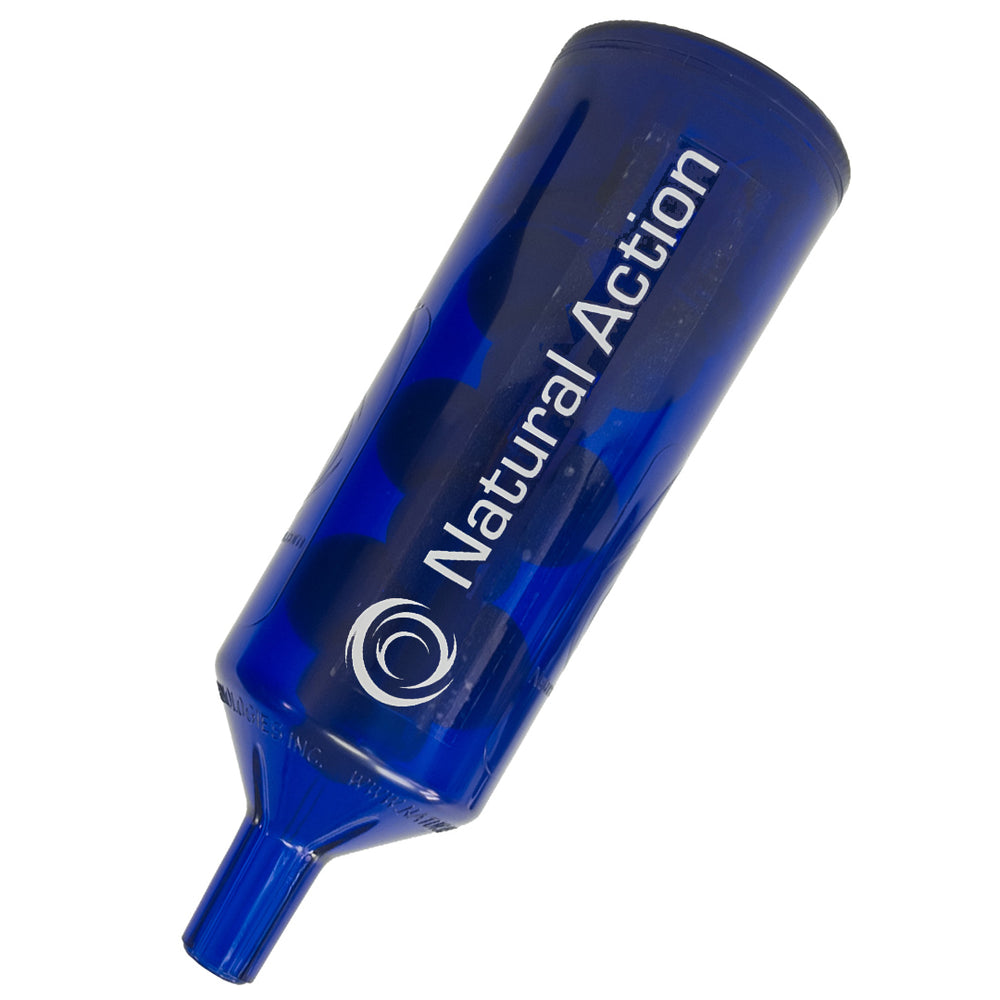
Veda Austin has reported differences in freezing patterns between certain water samples before and after passing through a Natural Action Portable Structured Water Revitalizer.
She has also described observations involving repeated melting and refreezing.
These observations are part of the exploratory work presented through her photography.
However, photographs alone cannot establish that a Natural Action device creates a lasting molecular change in liquid water.
Learn More about Veda Austin on her website
Determining whether a reproducible treatment effect exists would require controlled testing, standardized freezing conditions, blinded image evaluation, and independent replication.
We believe it is important to distinguish between an interesting observation and a scientifically established conclusion.

Explore Veda Austin's work: https://www.vedaaustin.com
Understanding the Crystal Photographs
The photographs on this page illustrate the visual variety of ice and partially frozen water.
They are presented as examples of exploratory water-crystal imagery.
They should not be interpreted as laboratory confirmation of improved drinking-water quality, permanent molecular restructuring, or medical benefits.
What the Images Show
Visible patterns that formed as particular samples froze.
What the Images Do Not Establish
They do not independently demonstrate:
-
Reduced water contaminants
-
Improved cellular hydration
-
Permanent molecular restructuring in liquid water
-
Improved DNA or enzyme function
-
Greater biological energy
-
Treatment or prevention of disease
These questions require different forms of scientific testing.

Is More Symmetrical Ice Better Water?
Not necessarily.
A symmetrical crystal may be visually appealing, but appearance alone is not a reliable measure of drinking-water safety or quality.
For example, contaminant concentrations cannot be determined by evaluating how attractive an ice photograph looks.
Similarly, a highly ordered ice formation does not demonstrate that the water will be absorbed more efficiently by human cells.
Water quality is better evaluated through appropriate physical, chemical, and microbiological testing.
When the goal is contaminant reduction, filtration or other treatment should be selected based on the substances present and documented treatment performance.
When the goal is studying crystal formation, the appropriate tools are controlled physical experiments and analytical measurements.
The questions are different, and the methods should reflect that.
What About Hexagonal Water?
The term hexagonal water is often used in structured-water marketing.
It is important to separate the established science of ice from claims about ordinary liquid drinking water.
Ice commonly forms a hexagonal crystal lattice under everyday atmospheric conditions.
Liquid water behaves differently.
Its hydrogen-bond network is dynamic, with molecular interactions continually changing over very short timescales.
The hexagonal structure of ice does not establish that a commercial water-conditioning device produces stable hexagonal clusters in liquid water.
It also does not establish that such clusters improve hydration, metabolism, or other biological functions.
The structure of ice and the behavior of liquid water are related scientific subjects, but they are not interchangeable.
How Does This Relate to Structured Water?
Natural Action uses the term structured water to describe water that has passed through a device designed to create controlled, vortex-inspired flow.
Our passive flow-form systems guide water through engineered internal pathways.
Vortex motion is a well-established phenomenon in fluid dynamics.
It can be observed and studied through physical measurements of flow.
However, the presence of vortex motion does not by itself prove that liquid water retains a permanent molecular arrangement after leaving a device.
At Natural Action, we believe customers deserve to understand both the engineering approach and the limits of current evidence.
What Natural Action Devices Are Designed to Do
-
Guide water through engineered flow pathways
-
Create vortex-inspired movement
-
Operate passively without electricity for the structuring process
-
Offer portable, under-sink, and whole-home applications
What They Are Not
Natural Action structuring devices are not contaminant-removal filters.
They should not be represented as proven treatments for medical conditions or as devices that have established superior cellular hydration.
Learn More About Structured Water
What About Masaru Emoto's Water-Crystal Experiments?
Japanese author Masaru Emoto helped popularize water-crystal photography through experiments involving words, music, and human intention.
His photographs attracted widespread interest in the relationship between water and its environment.
However, his interpretations remain scientifically controversial.
Criticisms of the work include subjective image selection, methodological limitations, and a lack of robust independent replication.
The available evidence does not establish that words, thoughts, or intentions reliably change water's molecular structure.
Emoto's work remains relevant to the history of popular interest in water imagery, but it should not be presented as scientific validation of structured-water devices.
What About Exclusion Zone Water?
Exclusion Zone water, often called EZ water, refers to observations involving water near certain hydrophilic surfaces.
Researchers have studied zones where suspended particles or solutes are excluded from regions adjacent to these surfaces.
The mechanisms and interpretations of these observations remain subjects of scientific investigation.
EZ-water research is not the same as ice-crystal photography.
It also does not establish that a commercial vortex device creates a persistent, biologically superior form of drinking water.
These subjects may all inspire questions about water behavior, but each requires its own methods and evidence.
What Would Strong Scientific Evidence Look Like?
To evaluate whether a water-conditioning device consistently changes a measurable property of water, researchers would need to control important experimental variables.
A well-designed study could include:
1. Matched Water Samples
Samples drawn from the same source and handled under comparable conditions.
2. Standardized Treatment
Clearly documented device operation and water-flow conditions.
3. Controlled Freezing
Consistent temperature, container, sample volume, and freezing duration.
4. Blinded Image Evaluation
Evaluators who do not know which samples received treatment.
5. Quantitative Measurements
Predefined methods for assessing differences rather than relying only on visual preference.
6. Independent Replication
Comparable findings reproduced by researchers who are not associated with the manufacturer.
If a study also makes biological or health claims, additional appropriate human research would be required.
This approach helps separate repeatable findings from variations caused by experimental conditions.
Natural Action's Approach: Flow, Not Force
Natural Action's approach to structured water begins with engineering.
Our devices use passive, vortex-inspired flow pathways rather than electricity or chemical additives for the structuring process.
We also recognize that improving water quality and conditioning water through flow are different objectives.
FILTER IT. Address What's in Your Water.
Use appropriate filtration when contaminants or other water-quality concerns need to be addressed.
REVITALIZE IT. Improve How Your Water Moves.
Explore passive vortex-inspired water conditioning through Natural Action's flow-form technology.
FILTER FIRST. STRUCTURE LAST.
When both approaches are appropriate, a compatible Natural Action structuring unit can be positioned after filtration, subject to the system's installation requirements.
SOMETIMES YOU NEED ONE. SOMETIMES YOU NEED BOTH.
Explore Natural Action Water Systems
Frequently Asked Questions
What is water crystallography?
Scientific crystallography studies the atomic and molecular arrangements of crystalline materials. Water-crystal photography generally documents visible patterns formed as water freezes. These are related but distinct methods.
Can ice-crystal photographs prove that water was structured?
No. Ice photographs show formations produced during freezing. They cannot independently establish that the original liquid water had a permanent molecular arrangement.
Why do different water samples form different ice patterns?
Crystal formation can be affected by cooling conditions, dissolved substances, sample volume, container characteristics, and other physical variables.
Does symmetrical ice mean healthier water?
No. Crystal symmetry is not a validated measure of drinking-water safety, contaminant levels, or health benefits.
Who is Veda Austin?
Veda Austin is a water photographer and researcher known for her exploratory Collective Molecular Photography technique, which documents patterns in partially frozen water.
What did Veda Austin observe with Natural Action water?
Austin has reported differences in freezing patterns involving samples passed through a Natural Action Portable Revitalizer. These are attributed observations and should not be interpreted as independent proof of permanent molecular restructuring.
Is water-crystal photography the same as scientific crystallography?
No. Scientific crystallography uses analytical methods to study crystal structures, while water-crystal photography typically captures visible formations during freezing.
Does crystallography prove better cellular hydration?
No. Ice-crystal photographs do not demonstrate that a water-conditioning device improves cellular hydration or other biological outcomes.
Is hexagonal ice the same as hexagonal liquid water?
No. Ordinary ice commonly has a hexagonal crystal lattice. Liquid water has a dynamic hydrogen-bond network and should not be assumed to retain the crystal structure of ice.
What is the relationship between EZ water and ice-crystal photography?
EZ-water studies investigate phenomena near certain surfaces. Ice-crystal photography documents patterns during freezing. They involve different observations and methods.
Can crystallography determine whether drinking water is safe?
No. Drinking-water safety requires appropriate chemical, physical, and microbiological testing. Ice photographs cannot substitute for water-quality analysis.
Final Thoughts: Appreciating Water Through Science and Observation
Water-crystal photography offers a fascinating view of the patterns that emerge as water freezes.
The images can inspire curiosity and encourage deeper questions about water's physical behavior.
But curiosity and evidence should work together.
At Natural Action, we believe that the most credible way to discuss structured water is to distinguish clearly between what can be observed, what can be measured, and what remains unproven.
Our commitment is to passive flow-form engineering, practical water solutions, and helping customers make informed choices.
Better Water Starts Here.
From One Glass to Your Entire Home.
Explore Natural Action's structured-water and filtration solutions.
EXPLORE NATURAL ACTION WATER SYSTEMS
Natural Action
It's Water, The Way Nature Intended.
Scientific and editorial note: Water-crystal photographs are presented for educational and exploratory purposes. Observations attributed to individual photographers are not equivalent to independent laboratory validation. Natural Action structuring devices are not intended to diagnose, treat, cure, or prevent disease.