



What Is Structured Water? The Science Behind Nature's Most Important Molecule
Water covers more than 70% of Earth's surface and makes up nearly 70% of the human body. Every heartbeat, every thought, every cellular process depends upon it.
Yet despite being one of the most studied substances on Earth, water remains one of science's greatest mysteries.
Most of us were taught that water is simply H₂O: two hydrogen atoms bonded to one oxygen atom. While that is chemically true, modern research shows that water's behavior cannot be fully explained by its chemical formula alone.
Scientists have discovered that water can organize itself into highly ordered structures, store and transfer energy, and exhibit properties that challenge traditional assumptions about how liquids behave.
This emerging field of research has given rise to terms such as Structured Water, Exclusion Zone Water, EZ Water, and the Fourth Phase of Water.
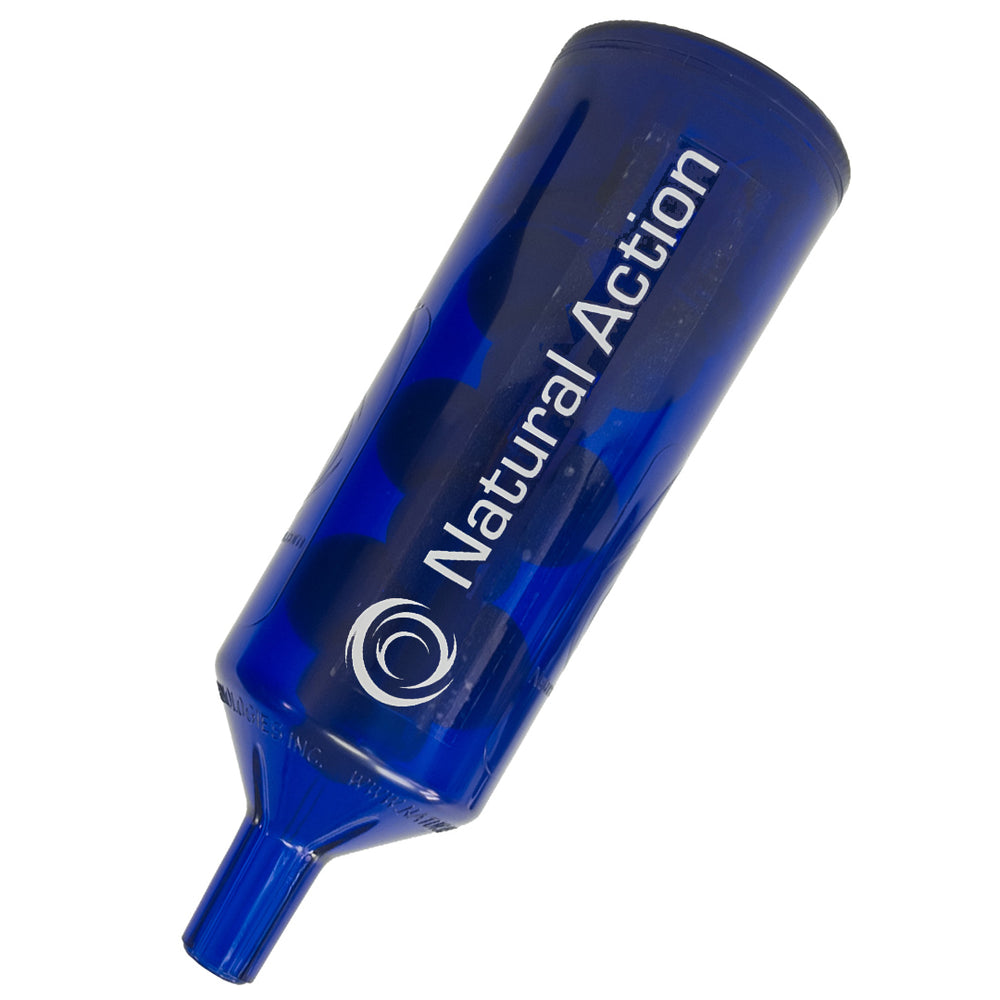
 At Natural Action, this research is the foundation behind our water revitalizing products. Our technologies are designed around the idea that water is not static. In nature, water moves, spirals, interacts with surfaces, absorbs energy, and continuously reorganizes itself.
But what do these terms actually mean?
Let's explore the science.
Water Is More Than H₂O
The common belief is that liquid water consists of molecules moving randomly in all directions.
In reality, water is highly dynamic.
Water molecules are constantly forming and breaking hydrogen bonds with neighboring molecules. At any given moment, trillions of molecular interactions are occurring throughout even a single glass of water.
These interactions create temporary networks that continuously reorganize themselves.
For decades, scientists assumed these molecular arrangements were largely random.
Today, researchers understand that under certain conditions, water can become significantly more organized.
This organization is what researchers often refer to as water structuring.
Natural Action products are inspired by this same principle. Rather than treating water as a simple commodity, our systems are designed to support the natural movement and environmental interactions water experiences in healthy ecosystems.
What Is Structured Water?
Structured water refers to water molecules that exhibit a greater degree of organization than ordinary bulk water.
The important distinction is that the chemical composition remains exactly the same.
The water is still H₂O.
What changes is the arrangement and behavior of the molecules.
Think of it this way:
A pile of bricks and a house are made of the same material.
The difference is organization.
Similarly, structured water and bulk water contain identical molecules, but those molecules may be organized differently.
Researchers have observed structured water forming naturally:
-
Near biological membranes
-
Around proteins
-
Adjacent to hydrophilic surfaces
-
Within living cells
-
In natural flowing water systems
This shows that water organization may play a fundamental role in life itself.
Natural Action's product line was created to bring some of these nature-inspired structuring principles into modern life through practical water solutions for drinking, bathing, gardening, pools, portable use, and whole-home water systems.
Is Structured Water Real?
Yes.
The existence of structured water near surfaces is not controversial.
Scientists have repeatedly observed organized water layers adjacent to hydrophilic, or water-loving, materials.
The scientific debate centers on:
-
How these structures form
-
How stable they are
-
Their biological significance
-
Whether structured states can persist under different conditions
In other words:
The phenomenon is real.
Researchers continue investigating its implications.
This distinction is important because many discussions about structured water incorrectly frame the debate as whether structured water exists at all.
The evidence shows that organized water structures do exist.
The unanswered questions involve what those structures mean.
At Natural Action, we believe the responsible approach is to respect both sides of that truth. Structured water is real, but not every claim made about structured water is automatically proven. That is why our products are positioned as water revitalizing technologies inspired by nature, not medical treatments or miracle cures.
The Discovery of Exclusion Zone Water
One of the most significant developments in modern water science came from Dr. Gerald Pollack and his research team at the University of Washington.
While studying water near hydrophilic surfaces, Pollack observed something unexpected.
Microscopic particles suspended in water were pushed away from certain surfaces, creating a particle-free region.
This region became known as the Exclusion Zone, or EZ.
The discovery raised a fundamental question:
Why was water behaving differently near these surfaces?
Further investigation revealed that the exclusion zone possessed properties unlike ordinary liquid water.
Researchers observed that EZ water:
-
Excluded dissolved particles
-
Exhibited greater molecular organization
-
Carried a negative electrical charge
-
Expanded when exposed to radiant energy such as infrared light
These findings show that water can exist in a state different from conventional liquid water.
Natural Action technologies are influenced by these broader principles: water responds to surfaces, energy, movement, and its environment. Our products are designed to support water through nature-inspired structuring influences rather than chemicals, additives, or artificial enhancement claims.
What Is EZ Water?
EZ Water stands for Exclusion Zone Water.
It refers to the highly ordered water found adjacent to hydrophilic surfaces.
Pollack's research suggests that this structured region can separate electrical charge within water.
When radiant energy enters the system, the exclusion zone expands while positively charged protons accumulate outside the zone.
This creates charge separation similar to a battery.
The implications are profound because living organisms are filled with hydrophilic surfaces, including:
-
Cell membranes
-
Proteins
-
DNA
-
Connective tissues
If exclusion zones are continuously forming throughout the body, structured water may play an underappreciated role in biological function.
This is one reason Natural Action focuses on water as part of a living system. Water in nature does not simply sit still. It moves through rivers, streams, springs, plants, soil, and biological tissues. Our products are designed to help modern water reconnect with some of those natural principles.
What Is the Fourth Phase of Water?
Traditionally, science recognizes three phases of water:
-
Solid, or ice
-
Liquid, or water
-
Gas, or vapor
Based on the unique properties observed in exclusion zones, Pollack proposed the existence of a Fourth Phase of Water.
Unlike ice, liquid, or vapor, EZ water possesses:
-
Greater molecular order
-
Distinct electrical properties
-
Different density characteristics
-
Unique interactions with energy
The Fourth Phase remains an active area of scientific investigation.
While not universally accepted by all researchers, it has become one of the most influential concepts in modern water science.
At Natural Action, we view this field as an invitation to keep asking better questions about water. Our technologies are built around natural water behavior: movement, flow dynamics, surface interactions, and the way water responds to its environment.
What Does "Hexagonal Water" Mean?
The term "hexagonal water" is commonly used in wellness discussions but often misunderstood.
Water molecules can form six-sided arrangements under certain conditions because of the geometry of hydrogen bonding.
However, water is constantly moving and reorganizing.
The idea that water permanently remains locked into perfect hexagonal structures inside a bottle is not supported by current scientific understanding.
Instead, the term generally refers to water exhibiting a higher degree of molecular organization.
While the phrase has become popular, scientists typically prefer terms such as:
-
Structured water
-
Ordered water
-
Interfacial water
-
Exclusion Zone water
These descriptions more accurately reflect what researchers observe.
This is why Natural Action avoids framing structured water as something frozen into one permanent shape. Our focus is on supporting the conditions associated with natural water organization, especially movement, flow, and interaction with water's environment.
Structured Water Exists Throughout Nature
One of the most fascinating discoveries is that structured water appears to be abundant throughout the natural world.
Researchers have observed organized water behavior:
Inside Living Cells
Cells are crowded environments filled with proteins, membranes, and biological surfaces that influence water organization.
Scientists now believe that much of the water inside cells exists in a highly organized state.
Around Plant Tissues
Plants create extensive water structuring through cellular membranes and biological interfaces.
This explains why fresh fruits and vegetables are naturally hydrating.
In Natural Springs
Flowing water encounters minerals, pressure gradients, rocks, sunlight, and vortex motion.
These environmental conditions contribute to water organization.
Throughout Biological Systems
Every living organism contains vast amounts of interfacial water interacting with biological structures.
Structured water is not an exotic phenomenon.
It is a fundamental characteristic of life.
Natural Action products are inspired by these same natural systems. Because most modern water is pumped, stored, pressurized, chemically treated, and transported through long infrastructure, our technologies are designed to help reintroduce some of the movement and environmental interaction water experiences in nature.
Who Discovered Structured Water?
No single scientist discovered structured water.
Instead, the field has evolved through contributions from many researchers.
Dr. Gilbert Ling
Proposed that cellular water exists in an organized state and plays a central role in biological function.
Viktor Schauberger
Observed unique properties of naturally flowing water and emphasized the importance of vortex dynamics in nature.
Dr. Gerald Pollack
Advanced modern understanding through his discovery of Exclusion Zone Water and the Fourth Phase of Water hypothesis.
Together, these researchers helped reshape our understanding of water's role in living systems.
Their work also influenced the broader movement toward nature-inspired water technologies. Natural Action's products are part of that movement, applying principles of flow, motion, and water-environment interaction to practical daily water use.
Why Is Structured Water Becoming So Popular?
Interest in structured water is growing because it sits at the intersection of several major scientific and health trends.
Cellular Health
Modern biology increasingly focuses on the cell as the foundation of health.
Water is the medium through which every cellular process occurs.
Bioenergetics
Researchers are exploring how energy production, charge separation, and water organization interact within living systems.
Hydration Science
Scientists are beginning to ask whether hydration involves more than simply consuming large quantities of water.
Emerging Research
New imaging technologies and experimental methods allow researchers to study water behavior in ways that were impossible only a few decades ago.
As our understanding evolves, so does public interest.
This is also why more people are looking for practical ways to bring nature-inspired water principles into their homes. Natural Action offers several product categories for different needs, including portable hydration, drinking water, shower water, garden water, pool water, inline filtration, and whole-home water structuring.
Choosing the Right Natural Action Product
Different people use water in different ways, so Natural Action offers products for different applications.
Portable Revitalizer
Best for travel, work, workouts, daily hydration, and people who want a simple starting point.
Sink Revitalizer
Best for drinking water, cooking water, coffee, tea, smoothies, and daily kitchen use.
Sink Revitalizer with Filtration
Best for customers who want both filtration and water revitalization at the point of use.
Shower Revitalizer
Best for bathing, showering, and skin-contact water.
Garden Revitalizer
Best for plants, soil hydration, outdoor watering, gardens, and landscapes.
Whole Home Revitalizer
Best for customers who want revitalized water throughout every faucet, shower, appliance, and plumbing fixture.
Pool Revitalizer
Best for larger water systems and pool applications.
CarbonGene Advanced Revitalizer and MagnaRay Advanced Revitalizer
Best for customers seeking advanced revitalization options for more complete home or specialty applications.
The best choice depends on where you want to begin: your drinking water, your shower, your garden, your whole home, or your daily hydration routine.
Can You See Structured Water?
Not with the naked eye.
Structured water cannot be identified simply by looking at a glass of water.
Researchers use advanced scientific techniques such as:
-
Microscopy
-
Spectroscopy
-
Electrical measurements
-
Surface interaction studies
-
Infrared imaging
These tools allow scientists to observe differences between ordinary bulk water and organized water structures.
The effects can be measured, even when they cannot be directly seen.
This is why education matters. At Natural Action, we encourage customers to understand the principles behind water structuring rather than relying on appearance alone. Clear water is not always the same as biologically meaningful water, and clean water is only one part of the larger conversation.
The Future of Water Science
For centuries, water was considered a simple substance.
Today, science tells a different story.
Researchers are discovering that water is an active participant in biological processes rather than merely a passive solvent.
Structured water research continues to evolve, raising new questions about hydration, energy, cellular function, and the fundamental mechanisms of life itself.
At Natural Action, we believe understanding water is one of the most important frontiers in health science.
That belief guides our products, our education, and our mission.
Our goal is not to force water to become something unnatural.
It is to support the principles nature has always used:
-
Movement
-
Flow
-
Surface interaction
-
Energy exchange
-
Biological compatibility
Because when we better understand water, we better understand life.
And the deeper we look into water, the more extraordinary it becomes.