



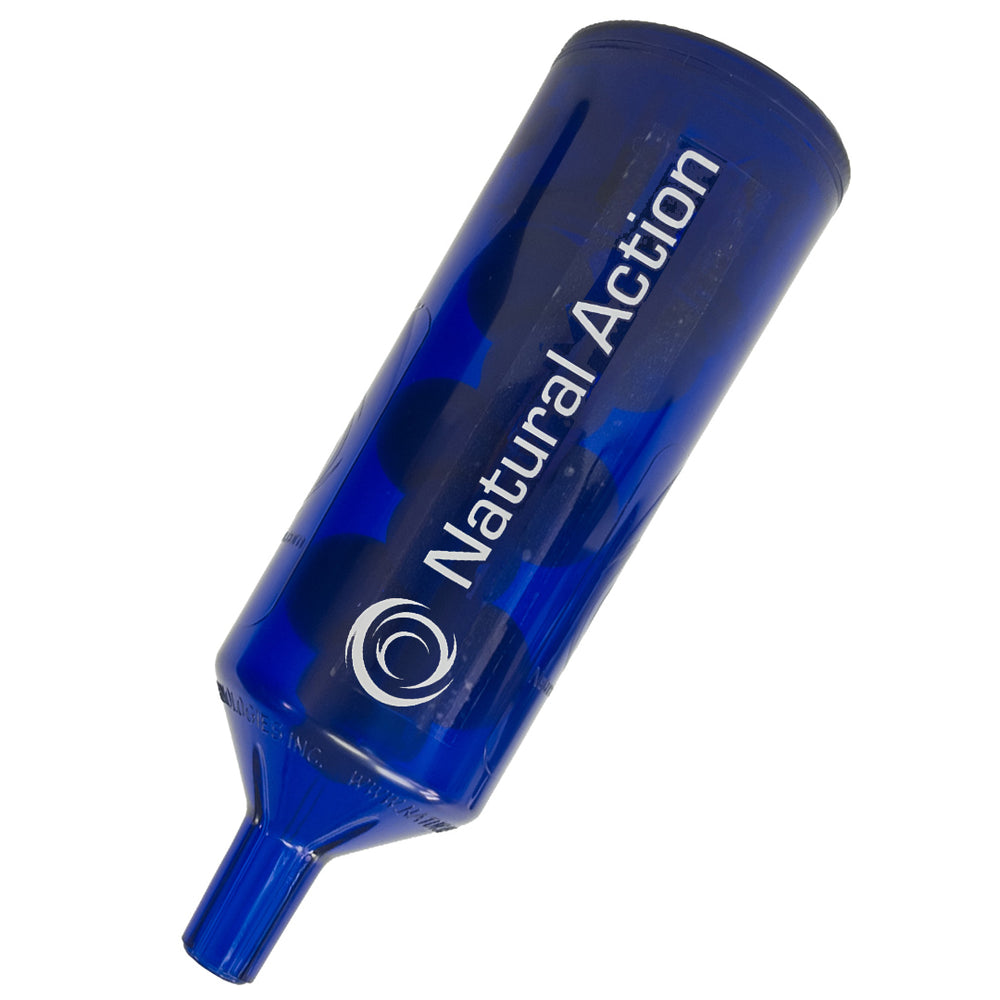
THE SCIENCE BEHIND THE WHOLE HOME REVITALIZER
Flow Dynamics, Vortex Motion, and Whole-Home Water Behavior
Clean water is the starting point.
How water moves is the missing piece.
Most home water systems focus on:
- Filtration (removing contaminants)
- Softening (adjusting minerals)
These matter.
But they don’t address something equally important:
how water behaves as it flows through your home.
The Whole Home Revitalizer is designed to influence water through:
- Flow dynamics (vortex motion)
- Whole-home distribution from a single point

What Happens to Water in Modern Homes
Before water reaches your faucet, it travels through:
- Treatment systems
- Pressurized infrastructure
- Straight plumbing lines
- Chemically controlled environments
By the time it enters your home, water is typically:
- Linear in movement
- Uniform and pressurized
- Lacking natural flow patterns
From a fluid mechanics perspective, this creates laminar-dominant flow, where mixing, aeration, and interaction are reduced (Munson et al., 2013).
Efficient—
but not how water behaves in nature.
Water in Nature: Movement Creates Behavior
In natural environments, water is always moving.
It:
- Swirls
- Spirals
- Cascades
- Interacts with surfaces and minerals
This creates vortex flow, a well-established phenomenon in fluid dynamics.
Vortex motion:
- Increases mixing and mass transfer
- Redistributes energy within the fluid
- Creates dynamic internal interaction
(Nezu & Nakagawa, 1993; Wilcox, 2006)
These conditions allow water to remain responsive and interactive.
The Whole Home Revitalizer is designed to reintroduce these conditions.
Core Technology: Vortex Flow Structuring
Inside the system, water is guided through:
- Engineered internal geometry
- Spiral flow pathways
- Controlled flow transitions
This creates:
- Rotational movement
- Organized turbulence
- More complex flow behavior
In fluid systems, turbulence enhances transport processes and interaction efficiency (Wilcox, 2006).
How the System Works
- Water enters your main supply line
- It flows through the revitalizer
- Internal geometry creates vortex motion
- Water exits into your home in a more dynamic state
From that point forward, all water is influenced:
- Showers
- Sinks
- Laundry
- Appliances
- Outdoor use
What Is “Structured Water”?
Structured water refers to water influenced by:
- Flow patterns
- Surface interaction
- Environmental conditions
Water molecules form dynamic hydrogen-bond networks that shift in response to energy and movement (Ball, 2008 — https://doi.org/10.1021/cr068037a).
Research into interfacial water shows that near surfaces, water can exhibit:
- More ordered molecular arrangements
- Distinct physical behavior
- Altered charge characteristics
(Zheng et al., 2006 — https://doi.org/10.1016/j.colsurfb.2005.08.027)
This suggests that how water moves and interacts affects how it organizes itself.
In nature, this occurs through:
- Continuous flow
- Contact with minerals
- Dynamic environmental interaction
The system recreates aspects of these conditions through flow design—not additives.
🔬 The Role of Flow Dynamics
The foundation of the system is fluid mechanics.
Vortex Flow
Water is guided into rotational motion that:
- Enhances internal interaction
- Creates non-linear flow behavior
- Improves distribution through plumbing systems
These effects are fundamental to turbulent flow systems studied in hydrodynamics (Nezu & Nakagawa, 1993).
Flow Geometry
Internal design creates:
- Controlled turbulence
- Continuous movement
- Balanced flow behavior
This mimics how water naturally moves in streams, cascades, and flowing systems.
Whole-Home Distribution
This system is installed:
at the point where water enters your home
That means:
- One system affects everything
- No need for multiple devices
- Consistent water behavior everywhere
What This Means in Real Use
Because this system influences how water behaves, users often report:
- Smoother water feel
- More consistent experience across taps
- Improved shower comfort
- Better interaction with skin and hair
These are:
physical interaction changes—not chemical changes
How This Compares to Other Systems
| System Type | Primary Function |
|---|---|
| Filtration | Removes contaminants |
| Softening | Alters mineral ions |
| Point-of-use systems | Improve one location |
| Whole Home Revitalizer | Changes flow behavior at the source |
Passive System Design
The Whole Home Revitalizer operates:
- Without electricity
- Without chemicals
- Without filters
- Without moving parts
It uses:
- Water pressure
- Internal geometry
- Flow design
to function continuously.
Important Clarifications
Does this filter water?
No. It does not remove contaminants.
Does it soften water?
No. It does not remove minerals.
Does it change water chemistry?
No. It influences physical flow behavior, not composition.
Does it replace filtration?
No. It can be paired with filtration systems if needed.
Frequently Asked Questions
What is the main benefit?
It improves how water behaves throughout your entire home—not just one location.
Will I notice a difference?
Many users report:
- Smoother-feeling showers
- More consistent water across faucets
- Less harsh interaction with skin and hair
How is this different from a filter?
A filter removes substances.
This system changes flow dynamics.
Does this help with hard water?
It does not remove minerals like a softener.
However, users often report improved interaction with surfaces.
Does it require maintenance?
No. It is a passive system designed for long-term operation.
Where is it installed?
At the main water entry point—so it affects the entire home.
Is this technology proven?
The system is based on:
- Fluid dynamics (well-established science)
- Turbulence and vortex flow behavior
- Engineered flow geometry
These are widely studied physical principles.
The Core Idea
Water is not just defined by what it contains—
but by how it moves.
The Whole Home Revitalizer restores:
natural movement at the point where water enters your home
Final Thought
You use water everywhere.
So when you improve it at the source—
you improve everything.
Your water. Your home. Your foundation.
👉 Explore the Whole Home Revitalizer
References
- Ball, P. (2008). Water as an active constituent in cell biology.
https://doi.org/10.1021/cr068037a - Zheng, J. M., et al. (2006). Interfacial water structure.
https://doi.org/10.1016/j.colsurfb.2005.08.027
- Nezu, I., & Nakagawa, H. (1993). Turbulence in Open-Channel Flows.
- Wilcox, D. C. (2006). Turbulence Modeling for CFD.
- Munson, B. R., et al. (2013). Fundamentals of Fluid Mechanics.