



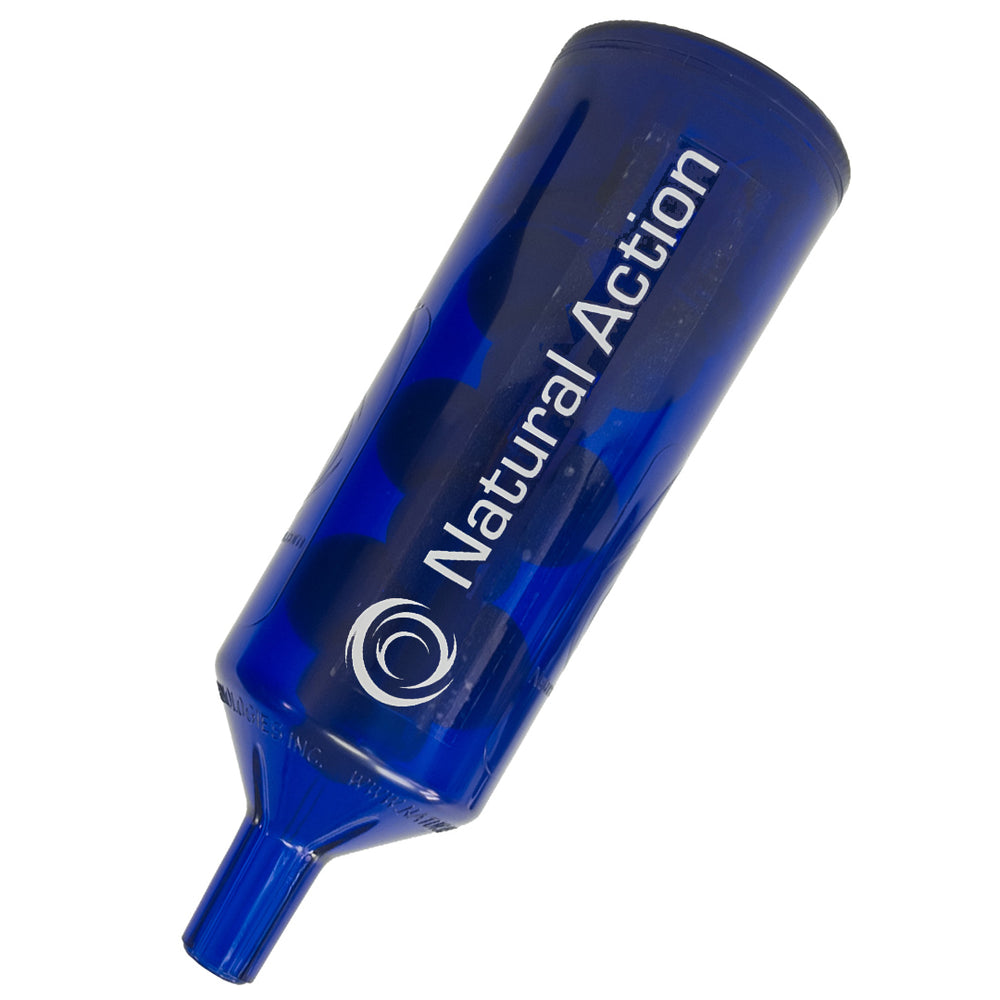
The Importance of Changing Your Water Filters: Clean Water Depends on a Clean Filter
Need replacement filters?
Shop Natural Action Replacement Filters
You invested in a water filtration system for a simple reason:
You wanted better water.Need replacement filters?
But installing a filtration system is only the beginning.
Every gallon of water that passes through your filtration system puts the filter media to work. Depending on the technology, your filters may be capturing or reducing sediment, chlorine, tastes, odors, particles, and specific contaminants.
And eventually, every filter reaches the end of its useful service life.
A water filter that isn't changed when needed can experience reduced performance, slower flow, pressure loss, and diminished contaminant-reduction capacity.
That's why one of the simplest things you can do for your water is also one of the most important:
Change your filters when they're due.
The CDC recommends maintaining and replacing household water filters according to manufacturer instructions. It also notes that microorganisms can live and multiply in water filters when they aren't properly maintained.
Learn More:
CDC — Preventing Waterborne Germs at Home
Need replacement filters?
Shop Natural Action Replacement Filters
Your Water Filter Is Doing More Work Than You Think
It's easy to forget about a water filter because most of its work happens where you can't see it.
Consider a sediment filter.
Water enters carrying suspended particles such as dirt, rust, sand, and other debris. The filter captures those particles before they continue downstream.
Over time, that material accumulates.
Activated carbon works differently.
Carbon filtration can reduce certain chemicals, tastes, and odors through a process called adsorption, depending on the design and certification of the particular filter.
But carbon doesn't have unlimited capacity either.
Eventually, the filter media needs to be replaced.
Think about the air filter in your home.
The fact that you need to replace it doesn't mean it failed.
You replace it because it has been doing its job.
The same principle applies to your water filtration system.
7 Reasons Changing Your Water Filters Matters
1. Every Filter Has a Limited Capacity
No water filter lasts forever.
Different filtration technologies have different capacities, and actual filter life can depend on:
-
Filter type
-
Water chemistry
-
Amount of water used
-
Sediment levels
-
Contaminant concentrations
-
Flow rate
-
Household size
-
Manufacturer specifications
A household with relatively low-sediment municipal water may experience very different filter life from a home using challenging well water.
That's why replacement schedules should be treated as part of an overall maintenance strategy.
Your actual water conditions matter.
2. An Old Filter May Not Reduce Contaminants as Effectively
This may be the most important reason to stay on top of filter maintenance.
Filters are selected to perform particular jobs.
As filter media becomes exhausted or reaches its rated capacity, its ability to perform those jobs can decline.
That's particularly important when you're relying on filtration to reduce a specific contaminant.
If your filter is certified for reduction of a particular contaminant, follow its rated capacity and replacement instructions.
Don't assume:
“Water is still coming out, so the filter must still be working.”
Flow and filtration performance are not the same thing.
3. Dirty Filters Can Reduce Water Flow
Have you noticed that your filtered-water faucet isn't flowing like it used to?
Your filter may be telling you something.
As sediment and other material accumulate, they can increase resistance to water flow.
You might notice:
-
Slower water flow
-
Reduced pressure
-
Longer filling times
-
Pressure changes elsewhere in the system
In whole-home systems, excessive pressure drop across filtration equipment can affect water delivery throughout the house.
Sometimes a filter change can make a noticeable difference.
4. Taste and Odor Can Begin to Change
One reason activated carbon is so popular in drinking-water systems is its ability to improve taste and odor while reducing certain substances, depending on the particular filter.
But carbon doesn't have infinite capacity.
If your water suddenly begins to taste or smell different, don't automatically assume something changed at the water treatment plant.
Check your filtration system.
A change in taste, odor, or appearance can be a sign that the filtration system needs attention.
Unexpected changes in water quality can also warrant testing or investigation of the water source.
5. Your Filter Is a Collection Point
Here's an easy way to understand why filter replacement matters:
Everything your filter captures has to go somewhere.
Much of it remains trapped in or on the filter until you replace it.
That's exactly what the filter is designed to do.
But it also explains why leaving a filter installed indefinitely isn't good maintenance.
Depending on the filter, water conditions, installation, and periods of inactivity, neglected filtration equipment can also create conditions where microorganisms may accumulate or grow.
That's another reason to follow the manufacturer's replacement and sanitation instructions.
6. Changing Filters Helps Protect Your Entire Water System
Water filters frequently don't work alone.
A well-designed filtration system may contain several stages.
For example:
Sediment Filter → Carbon Filter → Specialized Media → RO Membrane → Post-Filter
Each stage has a job.
And one stage may help protect the next.
A sediment prefilter, for example, can help prevent particulate matter from reaching more expensive downstream equipment.
Ignoring an inexpensive prefilter can potentially make other components work harder.
The same principle applies to larger whole-home filtration systems.
Proper maintenance helps protect the investment you've already made.
7. Fresh Filters Help Your System Perform as Designed
There's little point investing in high-quality filtration and then neglecting the components actually doing the filtering.
Replacing filters when required helps maintain:
-
Designed water flow
-
Appropriate pressure
-
Contaminant-reduction performance
-
Taste and odor performance
-
Equipment longevity
-
Overall system efficiency
Better equipment still requires good maintenance.
How Often Should You Change Your Water Filters?
There's no single replacement schedule that applies to every filter.
You may see recommendations online such as:
“Change every water filter every six months.”
That's too simplistic.
The correct interval depends on the filter technology, system, water quality, household usage, and manufacturer specifications.
A replacement interval may be based on:
-
Time
-
Gallons treated
-
Pressure drop
-
Contaminant capacity
-
Water quality
-
Or a combination of these factors
Always start with the replacement specifications for your particular system.
7 Signs Your Water Filter May Need Attention
Don't rely exclusively on the calendar.
Pay attention to your water system too.
1. Reduced Water Flow
A noticeable decrease in flow can indicate a loaded filter.
2. Pressure Loss
This can be particularly important with whole-home filtration.
3. Changes in Taste
Your water suddenly tastes different from what you've become accustomed to.
4. Changes in Odor
Chlorine or other odors become noticeable again.
5. Visible Sediment
Particles or discoloration appear where they weren't present previously.
6. You've Exceeded the Filter's Rated Capacity
Even if your water still appears and tastes fine, the filter may have reached its manufacturer's recommended replacement point.
7. You Can't Remember the Last Time You Changed It
If that's the case, it's probably time to check.
Natural Action RO Filter Maintenance
Reverse osmosis systems deserve special attention because they typically contain several different filtration components.
The Natural Action RO 10-Stage Under-Sink Water System uses multiple treatment stages to improve drinking water.
A typical RO configuration may include:
Sediment Prefilter
↓
Carbon Filtration
↓
Additional Pretreatment
↓
RO Membrane
↓
Post-Treatment / Remineralization
These components don't necessarily need replacement at the same time.
The prefilters help protect the RO membrane, while the membrane performs much of the dissolved-solids separation.
Failing to maintain the prefilters can affect overall system performance and may shorten membrane life.
Natural Action RO Replacement Filter Pack
Natural Action offers a replacement filter pack designed for maintaining the Natural Action 10-Stage Under-Sink RO System.
The replacement pack includes:
-
5-micron sediment filter
-
Carbon Block (CTO) filter
-
1-micron filter with alkaline additive
-
Remineralization pack
These components should be replaced according to the current maintenance recommendations for the system.
Shop the Natural Action RO Replacement Filter Pack
Don't Forget the RO Membrane
The RO membrane is separate from the regular replacement filter pack.
It also doesn't necessarily need to be replaced as frequently as the prefilters.
Membrane life depends on factors including:
-
Incoming water quality
-
Household water consumption
-
Pretreatment
-
System maintenance
-
Feed-water pressure
The key lesson is simple:
Don't wait until the RO membrane needs attention before maintaining the filters that protect it.
Shop the Natural Action RO Membrane Replacement
Multipure Aquaversa Filter Replacement
Natural Action also pairs structured-water technology with Multipure Aquaversa filtration in drinking-water solutions.
This is a good example of how filtration and structuring can work together while performing different jobs.
The Multipure filtration cartridge is responsible for filtration and therefore requires periodic replacement.
The Natural Action structuring device performs a different function and doesn't depend on that replaceable cartridge to create its vortex/structuring process.
If you own a Natural Action + Multipure system, make sure the filtration cartridge is replaced according to the appropriate maintenance schedule.
Shop Natural Action Replacement Filters
What About Whole-Home Water Filters?
Whole-home filtration can process a tremendous amount of water.
Think about everything that can happen simultaneously in a home:
Someone takes a shower.
The washing machine runs.
A toilet flushes.
The dishwasher fills.
Someone turns on the kitchen faucet.
Outdoor irrigation may be operating.
All of that water may be passing through point-of-entry filtration equipment.
This is why flow rate and pressure drop become particularly important with whole-home filtration.
A loaded filter isn't simply a drinking-water issue.
It can affect the water experience throughout the house.
Natural Action Whole-Home Replacement Filters
Natural Action offers replacement filtration components for several whole-home and custom filtration configurations.
Depending on the system, these can include:
-
Carbon block filtration
-
NanoCeram filtration
-
Pentair filtration
-
Multipure filtration
-
Sediment filtration
-
Other specialized treatment components
Because whole-home systems can be designed around specific water conditions, don't assume every system uses the same cartridge or replacement schedule.
Maintain the components that are actually installed in your system.
View Natural Action Replacement Filters
Don't Know Which Filter You Need? Start With Your Water.
One of the biggest mistakes people make is choosing filtration without first understanding the problem they're trying to solve.
Different homes can have very different water.
Municipal water and well water present different considerations.
Even two homes in the same area can have different plumbing, household usage, and treatment goals.
That's why Natural Action believes in a simple principle:
Know your water.
If you're designing or upgrading a filtration system, consider testing your water or reviewing your municipal water-quality information.
Then select filtration for the actual conditions.
Once you have the right filtration system:
Maintain it.
Natural Action also offers water analysis services to help customers better understand their water before designing an appropriate treatment strategy.
Explore Natural Action Water Analysis & Replacement Filters
Need a Complete Under-Sink Filtration System?
If your current filtration system isn't meeting your needs, changing the filter may not always be the entire answer.
It may be time to reconsider the system itself.
For customers primarily concerned about drinking and cooking water, Natural Action offers under-sink solutions that can combine filtration with structured-water technology.
Options include drinking-water filtration and reverse osmosis configurations designed to provide an integrated approach to better water at the kitchen sink.
Explore Natural Action Under-Sink Drinking Water Systems
Need Filtration Throughout Your Home?
Some water problems aren't limited to the kitchen.
That's where whole-home filtration becomes important.
Natural Action offers whole-home solutions that can combine appropriate filtration with structured-water technology.
Depending on the project, a system can be designed around factors including:
-
Water chemistry
-
Municipal or well water
-
Household size
-
Number of bathrooms
-
Peak flow requirements
-
Sediment
-
Chlorine or other treatment chemicals
-
Hard-water conditions
-
Specific water-quality concerns
-
Desired level of filtration
The answer isn't simply:
“Buy the biggest filter.”
A better approach is:
Understand the water → Identify what needs treatment → Choose the appropriate technology.
Explore Natural Action Whole-Home Water Systems
An Important Difference: Natural Action Structuring Units Don't Have Filters to Replace
This distinction is important.
Filtration
Filtration is designed to address what's in your water.
Depending on the system and filter media, filtration may target sediment, chlorine, tastes, odors, specific chemicals, particles, or other substances.
Because the filtration media captures or adsorbs material, it eventually requires maintenance or replacement.
Natural Action Structured Water
Natural Action structuring devices perform a different job.
They use Natural Action's passive flow-form and vortex approach to physically condition water as it passes through the unit.
The structuring process itself does not rely on replaceable filter cartridges.
Natural Action structuring devices also don't require salt or electricity to produce the passive structuring action.
That makes filtration and structuring fundamentally different technologies.
And that's okay.
They don't need to compete.
They can work together.
Explore Natural Action Structured Water Devices
Have Both Filtration + Structured Water?
Then understanding your maintenance becomes simple.
Your Natural Action structuring device does not need a replacement filter for the structuring process.
Your separate filtration equipment does.
For example, a Natural Action system can combine whole-home structuring with drinking-water filtration.
The structuring unit physically conditions the water.
The filtration component addresses the substances it was specifically designed to reduce.
When the filtration media reaches the end of its service life, you replace the filtration media—not the Natural Action structuring unit.
That's why it's important to know exactly what's installed in your home and what each component is designed to do.
Explore Natural Action Structured Water + Filtration Solutions
Don't Let a Forgotten Filter Compromise Your Water System
People can invest substantially in improving their water and then forget about the component protecting the system.
Don't let that happen.
Put your replacement dates on your calendar.
Keep replacement filters available.
Record the date every time you install a new filter.
If appropriate for your system, monitor pressure before and after filtration.
Pay attention to changes in flow.
Follow manufacturer maintenance recommendations.
And periodically inspect your equipment for leaks or other signs that service may be required.
A few minutes of maintenance can help protect years of investment.
A Simple Water Filter Maintenance Checklist
Every few months, ask yourself:
When were my filters last changed?
How much water has passed through them?
Have I reached the manufacturer's rated capacity?
Has my water pressure changed?
Has the flow rate changed?
Has the taste or odor changed?
Is there visible sediment?
Are there leaks around the filter housings?
Does my system require sanitation or other maintenance?
Do I have replacement filters ready?
If you don't know the answers, it's worth checking today.
Frequently Asked Questions About Water Filter Replacement
What happens if I don't change my water filter?
Depending on the filtration technology and water conditions, an overdue filter may experience reduced contaminant-reduction capacity, decreased flow, increased pressure drop, or changes in taste and odor.
Neglected filtration equipment may also create sanitation concerns.
Can an old water filter make my water worse?
Potentially.
Filters accumulate material they capture, and certain systems can develop microbial growth when improperly maintained or left stagnant.
Always follow the manufacturer's replacement and sanitation instructions.
How do I know when my filter needs replacing?
Start with the manufacturer's time and/or gallon rating.
Reduced flow, pressure loss, changes in taste or odor, visible sediment, or significant pressure drop across the filter can also indicate that maintenance is needed.
Do all water filters need to be changed every six months?
No.
Replacement intervals vary considerably depending on filter technology, capacity, water chemistry, household usage, and system design.
Should I replace a filter even if the water still tastes good?
Yes, if the filter has reached its manufacturer's rated service life or capacity.
Taste alone cannot tell you whether a filter is still effectively reducing a particular contaminant.
How often should reverse osmosis filters be changed?
RO systems typically contain several different filters plus an RO membrane, and those components can have different replacement intervals.
Follow the maintenance schedule for your particular system rather than assuming every component needs replacement at the same time.
Does a whole-home filter need to be changed more often than an under-sink filter?
Not necessarily.
Whole-home systems process significantly more water but are generally designed with larger-capacity filtration.
Replacement should be based on the specifications of the particular system and actual water conditions.
Do Natural Action structured-water units need replacement filters?
The Natural Action structuring process itself does not rely on a replaceable filter cartridge.
If your Natural Action system is paired with separate filtration equipment, those filtration components still need to be maintained and replaced according to their specifications.
Can I use filtration and structured water together?
Yes.
That's actually an important part of the Natural Action approach.
Filtration and structured-water technology perform different functions and can be incorporated into the same overall water strategy.
Better Water Doesn't Stop at Installation
The filter hidden beneath your sink or inside your equipment room may not be the most exciting component of your water system.
But it's doing an important job every day.
Don't wait until your water tastes different or your pressure drops dramatically before thinking about it.
Know your water.
Know your system.
Know what each component does.
Change filters when required.
Maintain your filtration.
And remember the distinction:
Filter what needs to be removed.
Structure the water.
Maintain each technology appropriately.
Better water isn't simply about buying the right equipment.
It's about keeping that equipment performing the way it was designed to perform.
Time for a filter change?
Shop Natural Action Replacement Filters →
Looking for a better drinking-water solution?
Explore Under-Sink Water Systems →
Ready to improve water throughout your home?
Explore Whole-Home Water Systems →
Interested in structured water?
Explore Natural Action Structured Water Devices →
Natural Action
It's Water, The Way Nature Intended.