



Is Structured Water Scientifically Proven? What the Research Actually Shows
Structured water has become one of the most talked-about topics in health, wellness, hydration, and environmental science. Supporters believe it may represent a more natural and biologically supportive form of water, while critics argue that more research is needed before broad conclusions can be drawn.
So what does the science actually say?
At Natural Action, we've spent almost 20 years researching, developing, and manufacturing structured water technologies designed to revitalize water using principles found in nature. We believe consumers deserve an honest look at the science—without hype, exaggerated claims, or misinformation.
In this article, we'll explore:
-
What structured water is
-
What current research shows
-
What remains under scientific investigation
-
Why Natural Action has been a trusted leader in structured water technology for decades

What Is Structured Water?
Structured water refers to water that exhibits a more organized molecular arrangement than ordinary bulk water.
Scientists have used various terms when discussing this concept, including:
-
Structured Water
-
Exclusion Zone (EZ) Water
-
Fourth Phase Water
-
Interfacial Water
-
Ordered Water
-
Coherent Water
The concept is based on observations that water behaves differently near certain surfaces, particularly hydrophilic (water-loving) surfaces. Under these conditions, water may form highly organized regions with unique physical properties that differ from ordinary liquid water.
While the exact mechanisms continue to be studied, researchers have increasingly recognized that water is far more dynamic and complex than previously believed.
The Science Behind Structured Water
One of the most influential areas of structured water research comes from the work of Dr. Gerald Pollack and his team at the University of Washington.
Dr. Pollack's research focuses on what he calls the "Fourth Phase of Water" or Exclusion Zone (EZ) Water.
His experiments demonstrated that water adjacent to hydrophilic surfaces can organize itself into a distinct phase that differs from ordinary liquid water. This region excludes particles and solutes, leading to the term "Exclusion Zone."
Researchers observed several interesting characteristics:
-
Greater molecular organization
-
Charge separation
-
Unique optical properties
-
Increased stability compared to bulk water
These findings suggest that water may be capable of forming organized structures under certain conditions.
Importantly, these observations have been reproduced and studied by researchers around the world, making structured water a legitimate area of scientific investigation rather than a purely theoretical concept.
Why Scientists Are Interested in Water Structure
Water is involved in virtually every biological process.
The human body is composed primarily of water, and every cell depends on water for:
-
Nutrient transport
-
Waste removal
-
Energy production
-
Communication between cells
-
Protein function
-
Enzymatic activity
Because water plays such a central role in biology, researchers are increasingly interested in understanding whether different structural arrangements of water may influence how it behaves in living systems.
This area of research remains active and continues to generate new discoveries.
What Studies Have Found
A growing body of research has examined water structure, exclusion zone formation, and water behavior near biological surfaces.
Studies have explored:
-
Water organization near membranes
-
Charge separation phenomena
-
Interfacial water properties
-
Biological hydration systems
-
Water behavior in plant growth environments
-
Agricultural applications
-
Environmental systems
Many researchers believe these findings challenge traditional assumptions that liquid water is entirely random at the molecular level.
However, it is important to understand that structured water research is still evolving.
While numerous studies support the existence of organized water structures under specific conditions, researchers continue investigating how these structures form, how long they persist, and what practical implications they may have.
What Science Has Not Yet Proven
This is where it is important to separate scientific research from marketing claims.
The existence of organized water structures such as Exclusion Zone Water is supported by published research.
However, not every claim made by every structured water company has been scientifically validated.
For example:
-
Not all structured water devices operate the same way.
-
Not all structured water technologies have been independently tested.
-
Many health claims associated with structured water require additional research.
-
Scientists continue debating certain aspects of water behavior and biological significance.
At Natural Action, we believe transparency is essential. The science is exciting, but it is also still developing.
Consumers should be cautious of companies that promise miracle cures or make claims that go beyond the available evidence.
The Natural Action Approach
For almost two decades, Natural Action has focused on developing technologies that work with water's natural tendencies rather than relying on chemicals, additives, or electricity.
Natural Action systems are designed around principles observed in nature, including:
-
Vortex movement
-
Natural flow dynamics
-
Water revitalization
-
Hydrodynamic optimization
Our goal is simple:
To help water behave more like the water found in healthy natural environments such as mountain streams, rivers, waterfalls, and springs.
Unlike many conventional water treatment systems, Natural Action products require no electricity and no ongoing chemical inputs.
Why Natural Action Is Different
Natural Action has been a pioneer in the structured water industry for almost 20 years.
Our systems are trusted by:
-
Homeowners
-
Health practitioners
-
Wellness professionals
-
Farmers
-
Gardeners
-
Livestock operations
-
Commercial facilities
Customers choose Natural Action because of our commitment to:
Science-Informed Design
Our technologies are based on decades of research and observation into water behavior and natural flow dynamics.
Sustainable Operation
No chemicals, no electricity, and no ongoing consumable components.
Long-Term Reliability
Natural Action products are engineered for years of dependable performance.
Whole-Life Water Improvement
Our systems are designed to support water use throughout the home, garden, farm, and workplace.
Explore Natural Action Structured Water Solutions
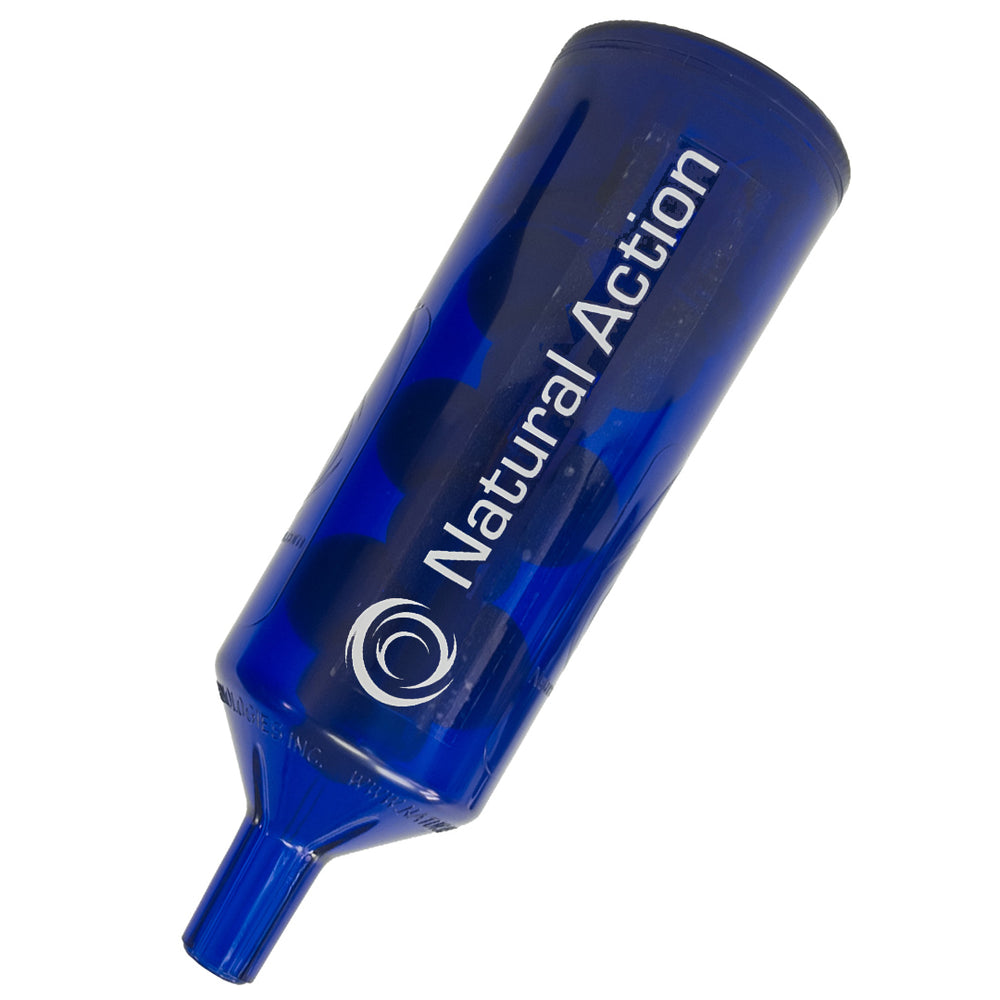
Portable Structured Water Units
Our Portable Structured Water Units provide an easy way to enjoy revitalized water at home, at work, while traveling, or during outdoor activities.
Ideal for:
-
Daily drinking water
-
Travel
-
RV living
-
Office use
-
Emergency preparedness
Under-Sink Structured Water Systems
Designed for households seeking a dedicated source of revitalized water directly from the kitchen.
Benefits include:
-
Convenient daily hydration
-
Compact installation
-
Consistent water quality
-
Long-term durability
Whole House Structured Water Systems
Whole House Systems bring Natural Action technology to every water source throughout your property.
Applications include:
-
Drinking water
-
Bathing
-
Laundry
-
Cooking
-
Gardening
-
Household water use
Agricultural and Commercial Systems
Natural Action technology is also used in:
-
Farms
-
Greenhouses
-
Livestock operations
-
Commercial water systems
Many customers explore structured water as part of broader sustainability, efficiency, and water-quality initiatives.
Frequently Asked Questions
Is structured water scientifically proven?
Research supports the existence of organized water structures under certain conditions. However, scientists continue investigating the full implications of these findings and how they apply across different technologies and applications.
What is EZ Water?
EZ Water, or Exclusion Zone Water, refers to a structured region of water observed near hydrophilic surfaces. The concept was extensively studied by Dr. Gerald Pollack and his research team.
Is structured water the same as filtered water?
No.
Filtration focuses on removing contaminants from water.
Structured water technologies focus on influencing the physical behavior and organization of water itself.
Many Natural Action customers choose to use both filtration and water structuring together.
Do I still need a water filter?
If your water contains contaminants, filtration may still be important. Structured water technology and filtration address different aspects of water quality and are often used together.
Final Thoughts
So, is structured water scientifically proven?
The most accurate answer is that the science supporting water structure is real, legitimate, and growing. Research into Exclusion Zone Water, interfacial water, and organized water behavior continues to expand our understanding of this remarkable substance.
At the same time, structured water remains an evolving field of study, and not every claim made in the marketplace is supported by evidence.
At Natural Action, we remain committed to a balanced, science-informed approach. For almost 20 years, we have focused on helping people experience water in a form that more closely reflects the vitality and movement found in nature.
Whether you're interested in a Portable Structured Water Unit, an Under-Sink System, a Whole House System, or Agricultural Water Solutions, Natural Action continues to lead the way in structured water technology and water revitalization.
Explore our products and discover why thousands of customers worldwide trust Natural Action for their structured water needs.
Scientific References
Pollack GH. The Fourth Phase of Water: Beyond Solid, Liquid, and Vapor. Ebner & Sons Publishers, 2013.
Zheng JM, Chin WC, Khijniak E, Khijniak E Jr, Pollack GH. Surfaces and interfacial water: Evidence that hydrophilic surfaces have long-range impact. Advances in Colloid and Interface Science. 2006;127:19-27.
Chai B, Yoo H, Pollack GH. Effect of radiant energy on near-surface water. Journal of Physical Chemistry B.2009;113(42):13953-13958.
Ling GN. A Physical Theory of the Living State: The Association-Induction Hypothesis. Blaisdell Publishing Company, 1962.
Ball P. Water as an active constituent in cell biology. Chemical Reviews. 2008;108(1):74-108.
Chaplin M. Do we underestimate the importance of water in cell biology? Nature Reviews Molecular Cell Biology.2006;7:861-866.
Del Giudice E, Preparata G, Vitiello G. Water as a free electric dipole laser. Physical Review Letters. 1988;61(9):1085-1088.