



What's in Your Tap Water? Home Water Quality Guide
Turn on the kitchen faucet and the water may look perfectly clear.
But what does “clear” actually tell you about your water?
Not very much.
Tap water quality depends on where your water comes from, how it is treated, the condition of the distribution system and plumbing it travels through, and—if you have a private well—the characteristics of the groundwater supplying your property.
That does not mean you should assume something is wrong with your water. It means that if you want to improve your water intelligently, the best place to begin is with information rather than assumptions.
At Natural Action, we believe the process should be simple:
MEASURE → UNDERSTAND → FILTER APPROPRIATELY → MAINTAIN CONSISTENTLY → STRUCTURE IF DESIRED
Before choosing another filter, reverse osmosis system, or structured water device, start with a more fundamental question:
What’s actually in your water?
Tap Water Is Not the Same Everywhere
There is no single answer to the question, “What’s in tap water?”
Two homes a few miles apart can have different water characteristics—especially if one receives municipal water and the other relies on a private well.
Even homes served by the same public water system can have differences related to household plumbing, service lines, building age, and other site-specific factors.
That is why your home water quality should be evaluated based on your actual water source and concerns—not simply on a generic list of possible contaminants.
A good place to start is Natural Action’s Better Water Starts With the Right Question guide.
City Water vs. Well Water: What’s the Difference?
Understanding your source is step one.
If You Have City or Municipal Water
Public water systems treat drinking water and monitor it according to applicable federal and state requirements.
If you receive water from a community water system, you also have access to an important resource: your Consumer Confidence Report, or CCR.
The EPA requires community water systems to provide customers with an annual drinking water quality report. A CCR can tell you where your water comes from, which regulated contaminants were detected, how detected levels compare with applicable standards, and whether the system had reported violations.
Learn how to understand your Consumer Confidence Report from the EPA.
A CCR is an excellent starting point, but it describes the public water system—it isn't the same as laboratory testing water collected directly from your kitchen faucet.
Your home's plumbing and service line are another part of the journey.
If You Have Private Well Water
Private wells are different.
The CDC notes that EPA regulations protecting public drinking-water systems do not apply to privately owned wells. That makes regular testing particularly important for well owners.
CDC recommends testing private well water at least once each year for:
- Total coliform bacteria
- Nitrates
- Total dissolved solids (TDS)
- pH
Additional testing may be appropriate based on local geology, nearby activities, flooding, changes in taste/color/smell, repairs to the well, and guidance from local health authorities. CDC recommends using a state-certified laboratory.
See the CDC’s Guidelines for Testing Well Water.
What May Be in Tap Water?
The answer depends on your location and source.
Some substances are naturally occurring. Others may relate to treatment processes, plumbing, agriculture, industry, or surrounding environmental conditions.
Here are several categories homeowners may encounter.
1. Chlorine and Other Disinfectants
Municipal utilities commonly use disinfectants as part of water treatment.
For homeowners, disinfectants can also be associated with noticeable taste or odor.
If chlorine taste or odor is your concern, don't assume that every water filter provides the same reduction. Look at the specific performance claims for the individual filtration system.
2. Lead
Lead is different from many source-water concerns because household plumbing and service lines can play an important role.
A water report can provide useful information about your public water system, but if you have a specific concern about lead at your home, testing the water at the tap can provide information about your individual situation.
If lead reduction is the objective, choose filtration based on documented lead-reduction performance, not simply because a product is described broadly as a water filter.
NSF specifically advises consumers to check both the applicable certification standard and the product's claim for the particular contaminant they want to reduce.
3. PFAS
PFAS—per- and polyfluoroalkyl substances—have received considerable attention in drinking-water discussions.
But the accurate statement is:
PFAS may be present in some water supplies, depending on location and source.
You should not assume that PFAS are present in your particular tap water without evidence.
Federal PFAS drinking-water requirements are also an evolving regulatory area. As of September 2026, EPA is proposing to retain the PFOA and PFOS maximum contaminant levels of 4.0 parts per trillion each while allowing qualifying water systems to request additional compliance time to 2031. The proposal's public comment period closed in July 2026.
See the EPA’s current PFOA and PFOS regulatory information.
And there is an important distinction when shopping for filtration:
Do not assume every carbon filter or every reverse osmosis system reduces PFAS.
NSF advises consumers to verify the specific contaminant-reduction claim for the individual treatment product.
4. Sediment and Particulates
Cloudiness or visible particles can have different causes.
Sediment may relate to source water, pipes, plumbing work, well conditions, or other factors.
Instead of guessing based on appearance alone, investigate the source—especially when a change occurs suddenly.
5. Hardness and Minerals
Calcium and magnesium contribute to water hardness.
Hard water can leave recognizable signs around a home, including:
- Scale on fixtures
- Spots on glassware
- Mineral buildup
- Deposits on plumbing fixtures and appliances
Hardness is important because water softening, filtration, and structured water are not interchangeable technologies.
A conventional ion-exchange water softener performs a different job from a contaminant-reduction filter, and both perform different jobs from a Natural Action Structured Water System.
6. Nitrates and Other Well-Water Concerns
Private wells deserve their own strategy because groundwater conditions vary substantially by location.
Agricultural activity, septic systems, flooding, geology, nearby industrial activity, and other local factors can influence what testing may be appropriate.
That's another reason CDC recommends annual nitrate testing for private wells and consulting local health authorities about additional contaminants relevant to the area.
Can You Tell What's in Water by Taste, Smell, or Appearance?
Sometimes water gives you clues.
You may notice:
Chlorine-like odor
Metallic or unusual taste
Cloudiness
Sediment
Staining
White scale
Unusual color
But sensory clues have limitations.
Water that looks and tastes normal can still require testing to answer specific water-quality questions. Conversely, an unpleasant taste or mineral deposit doesn't automatically mean the water contains a particular harmful contaminant.
Observation is useful. Testing provides data.
How to Test Your Tap Water
If you're serious about improving your water, this is where Natural Action recommends beginning.
Step 1: Identify Your Source
Determine whether you have:
City/Municipal Water
or
Private Well Water
If you're not sure, establish that first.
Step 2: Review Available Water-Quality Information
Municipal customers should review their current Consumer Confidence Report.
The EPA says the report includes information such as the drinking-water source, regulated contaminants detected, and comparisons with drinking-water standards.
Step 3: Consider Testing Your Actual Tap Water
Testing becomes particularly valuable when:
- You use a private well
- You have concerns about household plumbing
- Your water changes in taste, odor, appearance, or color
- You want to investigate a specific contaminant
- You're considering a substantial filtration investment
- You want a baseline before designing a treatment system
Natural Action's guide to How to Test Your Home Water Quality explains our approach:
Measure → Understand → Filter Appropriately → Maintain Consistently.
For homeowners who want more comprehensive testing, explore Natural Action Water Testing.
Don't Buy a Filter Until You Know What Job You Want It to Do
This is where many homeowners make an expensive mistake.
They ask:
“What's the best water filter?”
A better question is:
“What am I trying to reduce?”
NSF's consumer guidance recommends first finding out what's in the water, then identifying the contaminants you want to reduce, and finally choosing a treatment system with appropriate documented performance. NSF also emphasizes that not all filters reduce all contaminants.
That distinction matters.
A filter designed to address chlorine taste and odor should not automatically be assumed to reduce lead.
A filter that addresses lead should not automatically be assumed to reduce PFAS.
And an RO system should not be assumed to provide every possible contaminant reduction simply because it uses reverse osmosis.
Match the treatment technology—and its documented performance—to the problem you're actually trying to address.
Point-of-Use vs. Whole-Home Filtration
Once you understand your water, the next question is where you want to treat it.
Point-of-Use
Point-of-use systems treat water at a specific location, such as the kitchen.
These can include:
- Under-sink filtration
- Reverse osmosis
- Faucet-mounted systems
- Refrigerator filters
- Countertop systems
If your primary goal is improving water for drinking and cooking, explore Natural Action's Under-Sink Drinking Water Solutions.
Point-of-Entry / Whole Home
A point-of-entry system treats water as it enters the home.
NSF notes that whole-house systems may include technologies such as whole-house filters, softeners, or UV treatment, depending on the job they are intended to perform.
Which approach makes sense depends on your water, your goals, and the specific problem you're trying to solve.
Filtration and Structured Water Are Not the Same Thing
This is one of the most important distinctions Natural Action makes.
Filtration
Filtration addresses what's in your water.
Depending on the specific system, filter media, certifications, testing, and maintenance, filtration can be selected to reduce particular substances.
Structured Water
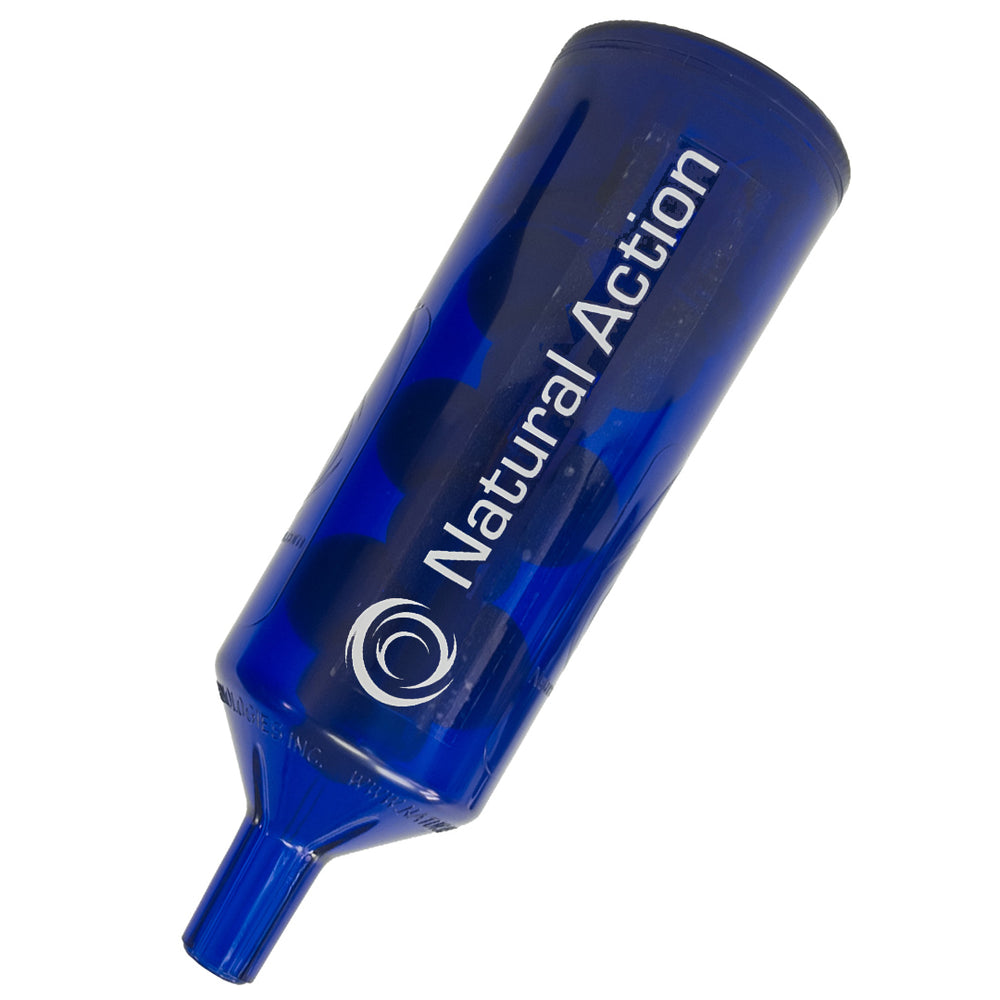
Natural Action Structured Water Systems are not contaminant-removal filters.
Natural Action systems use passive, vortex-inspired flow-form engineering as water passes through the device. Structuring is a separate step from filtration and should not be used as a substitute when contaminant reduction is required. Natural Action's current product guidance makes this distinction explicitly.
The simplest way to remember the difference is:
FILTER IT.
Address what's in your water.
STRUCTURE IT.
Change the way water moves through a passive, vortex-inspired process.
SOMETIMES YOU NEED ONE. SOMETIMES YOU NEED BOTH.
For homes that want both functions, Natural Action's approach is straightforward:
Filter First. Structure Last.
What If You Already Have a Water Filter or RO System?
You may not need to start over.
If your existing filtration system is appropriately addressing your water-quality needs, a Natural Action Structured Water System can often be considered as a separate downstream step.
For example, a homeowner with an existing reverse osmosis system may consider a post-RO Natural Action system rather than replacing filtration that is already doing its intended job.
That separation is important:
RO handles filtration.
Natural Action handles the structured-water step.
This allows you to build a water system around the functions you actually need instead of assuming one device must do everything.
Don't Forget Filter Maintenance
Buying the right filtration system is only half of the equation.
Filters are consumable components.
NSF advises homeowners to follow their system's replacement requirements because home water-treatment systems need regular maintenance to continue operating correctly.
That makes maintenance part of your water-quality strategy—not an afterthought.
Natural Action's approach is:
Measure.
Understand.
Filter appropriately.
Maintain consistently.
And if structured water is part of your goal:
Structure after filtration.
A Smarter Way to Think About Home Water Quality
You don't have to become a water chemist.
You just need to ask the questions in the right order.
1. Where does my water come from?
City or private well?
2. What do I know about it?
Review your CCR if you have municipal water and consider appropriate testing.
3. What am I trying to address?
Taste? Odor? Sediment? Hardness? A specific contaminant? Drinking water only? The entire home?
4. Does the treatment system document performance for that specific concern?
Don't assume. Verify.
5. Do I want filtration, structured water, or both?
They perform different functions.
6. How much of my home do I want to upgrade?
One glass? One faucet? The entire home?
Once you answer those questions, choosing a water system becomes much easier.
Which Natural Action Solution Fits Your Home?
Natural Action offers several starting points depending on your water and goals.
Better Drinking Water
Start with an under-sink solution when your primary focus is the water you drink and cook with.
Explore Under-Sink Drinking Water Solutions
Structured Water Throughout Your Home
Choose a point-of-entry structured-water system when your goal is bringing the Natural Action process to water throughout the home.
Explore Whole-Home Structured Water Systems
Not Sure Where to Start?
Compare Natural Action's portable, under-sink, post-RO, filtration + structuring, and whole-home options.
Compare Natural Action Products
Or use the Natural Action Water Assessment on the homepage for a guided recommendation based on your water, current equipment, structured-water interests, coverage goals, and budget.
Frequently Asked Questions
What's in tap water?
It depends on the source and location. Municipal water may contain naturally occurring minerals and substances related to treatment and distribution, while private well water reflects local groundwater conditions. A Consumer Confidence Report and appropriate water testing can provide much more useful information than assuming what's present.
How do I find out what's in my city water?
Start with your local water utility's Consumer Confidence Report. Community water systems are required to provide customers with an annual water-quality report.
How often should well water be tested?
CDC recommends testing private well water at least annually for total coliform bacteria, nitrates, total dissolved solids, and pH, with additional testing based on local conditions and potential concerns.
Can PFAS be in tap water?
PFAS may be present in some water supplies depending on the source and location. Do not assume your water contains PFAS without evidence from an appropriate report or test.
Does every carbon filter remove PFAS?
No. You should verify the individual product's documented contaminant-reduction claims. NSF emphasizes that certification to a particular standard does not mean a treatment system reduces every possible contaminant.
Does every reverse osmosis system remove the same contaminants?
No. Performance varies by system. Look for documented or certified reduction claims for the specific contaminants you are concerned about.
Is hard water the same as contaminated water?
No. Hardness generally refers to dissolved minerals, particularly calcium and magnesium. Hardness, contaminant reduction, water softening, and structured water are separate considerations.
Is structured water the same as filtered water?
No. Natural Action Structured Water Systems are not contaminant-removal filters. Filtration is selected to reduce specific substances; Natural Action structuring uses a passive, vortex-inspired flow-form process.
Can I use structured water with my existing filtration system?
Often, yes. Natural Action's general approach when both functions are desired is filter first, structure last. The appropriate configuration depends on the existing equipment and installation.
Should I test my water before buying filtration?
Testing can be particularly valuable when you have a private well, a specific contaminant concern, unusual water conditions, or you're planning a substantial treatment system. It allows filtration decisions to be based on data rather than guesswork.
Better Water Starts With Better Information
The goal isn't to become afraid of tap water.
It's to understand it.
Your water source, water-quality report, household plumbing, testing results, treatment equipment, and goals all help determine the right approach.
So before asking:
“Which water system should I buy?”
Start here:
“What's actually in my water—and what do I want to accomplish?”
Then build from there.
MEASURE → UNDERSTAND → FILTER APPROPRIATELY → MAINTAIN CONSISTENTLY → STRUCTURE IF DESIRED
That's a more intelligent path to better water.
Take the Natural Action Water Assessment to find a practical starting point for your home.


