



What Does Revitalization Really Mean?
When Natural Action talks about revitalizing water, we're describing something very specific: our nature-inspired approach to the way water moves.
Look at water in nature.
It doesn't normally travel through long, straight pipes. It spirals through streams, tumbles over rocks, moves around bends, passes through mineral formations, and continually changes direction.
Natural Action was created around a simple idea:
What if we could bring some of those natural patterns of movement back into the way water flows through our homes?
That's what we mean by revitalization.

What Is Water Revitalization?
At Natural Action, revitalization describes our overall design philosophy of using vortex motion, flow-form engineering, and mineral interaction to create a more dynamic pathway for water.
It is not another word for filtration.
Filtration addresses what is in your water.
Revitalization focuses on how your water moves.
Our structured water systems are designed to guide water through engineered flow paths inspired by the movement found in streams, rivers, waterfalls, and other natural waterways.
We call this approach Natural Action because nature provides the blueprint.
Structured Water, Vortex Water and Revitalized Water
When researching water, you'll encounter many different terms. They are sometimes used interchangeably online, even though they don't necessarily mean the same thing.
Structured Water
Water molecules continuously form and reform temporary hydrogen-bonded networks. Scientists continue to study how temperature, pressure, dissolved minerals, surfaces, and other physical conditions influence these interactions.
The broader concept commonly called structured water attempts to describe changes in the organization or physical behavior of water under particular conditions.
Research in this field continues to evolve, and claims about persistent water structures or specific biological effects should not be treated as established simply because they're described as “structured water.”
Vortexed Water
This term is much more straightforward.
Vortexed water is water placed into spiral or rotational motion.
Vortices occur throughout nature—from rivers and ocean currents to weather systems—and vortex behavior is well established in fluid dynamics.
Natural Action uses engineered internal geometry to create vortex and flow patterns as water moves through our systems.
Revitalized Water
Revitalized water is Natural Action's broader term for our nature-inspired approach.
For us, revitalization brings together:
· Vortex motion
· Flow-form geometry
· Dynamic water movement
· Mineral interaction
· Nature-inspired flow patterns
· Passive operation without electricity or added chemicals
The term describes our overall design philosophy rather than a separate scientifically defined category of water.
Why Natural Action Focuses on Flow
Modern plumbing is designed primarily to move water efficiently from one location to another.
Nature moves water differently.
Natural waterways curve, spiral, tumble, aerate, change pressure, interact with minerals, and continuously respond to their surroundings.
That difference inspired Natural Action's approach.
Instead of forcing water through another powered appliance, Natural Action systems use the water's existing pressure to guide it through specially designed internal flow paths.
Flow, not force.
There are no motors required to create the structuring process. No electricity is required. No chemicals are added to the water.
The movement happens as water flows through the device.
Flow-Form Engineering
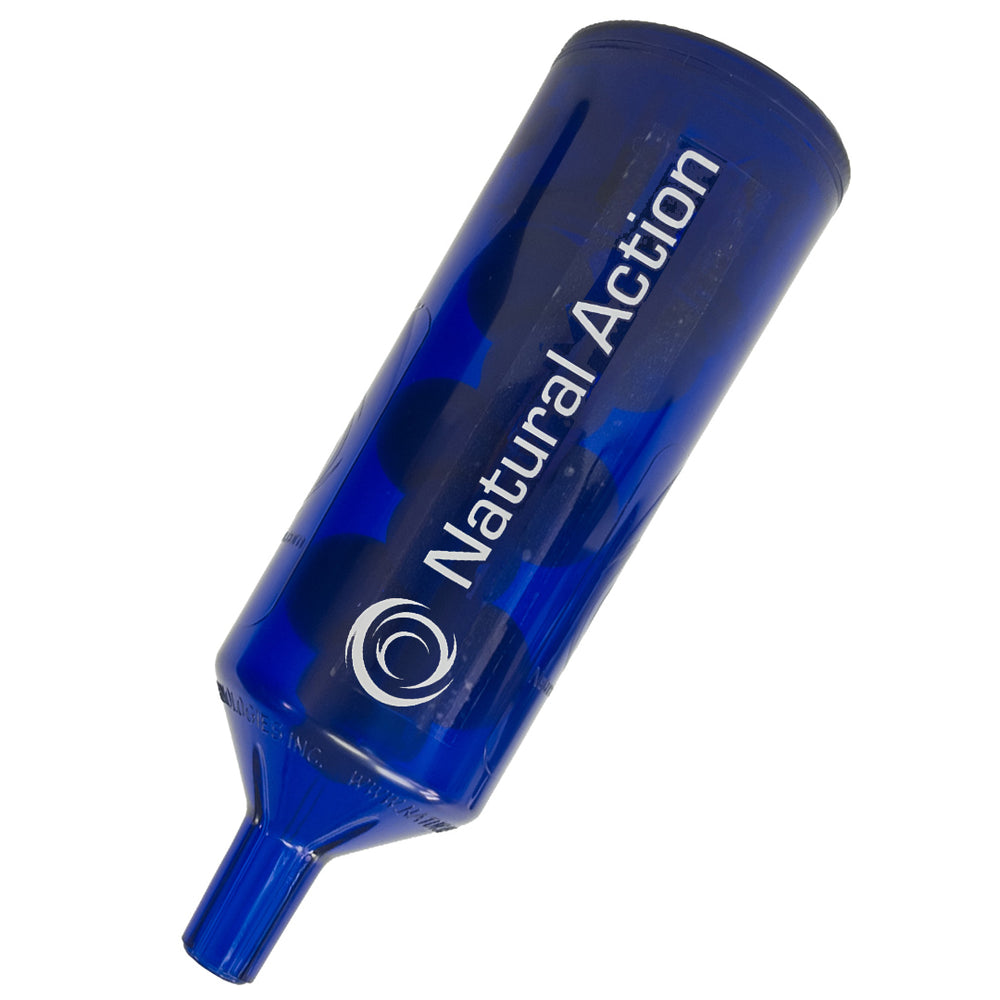
At the center of Natural Action technology is our flow-form engineering.
The internal geometry of each system is designed to change the path water follows as it passes through the unit, creating vortex and rotational movement instead of simply allowing water to continue through a straight pipe.
Our systems also incorporate mineral contact, including materials such as shungite and ancient quartz, as part of the internal design.
The result is a passive water-conditioning process inspired by patterns we observe in natural moving water.
What Revitalization Does — and Doesn't Do
This distinction is important.
Revitalization is not filtration.
Natural Action structured water systems are not designed to remove contaminants simply by structuring the water.
If chlorine, sediment, PFAS, heavy metals, microorganisms, or other contaminants are a concern, appropriate water testing and filtration should be considered.
That's why we often describe better water as a two-part approach:
1. FILTER IT.
Address what's in your water.
2. REVITALIZE IT.
Improve how your water moves.
Sometimes you need one.
Sometimes you need both.
What About “Water Memory,” “Living Water” and “Hexagonal Water”?
You'll encounter terms such as water memory, living water, hexagonal water, coherent water, fourth-phase water, and EZ water when researching structured water.
Some refer to legitimate areas of scientific investigation. Others are broader concepts or terminology used in alternative water communities.
They should not all be treated as interchangeable or as established scientific facts.
For example, research has demonstrated that water's molecular organization is dynamic and influenced by its physical environment. Researchers have also investigated unusual behavior of water near hydrophilic surfaces and other interfaces.
However, broader claims about permanently restructuring ordinary drinking water, “water memory,” or specific biological benefits remain areas of investigation and debate.
Natural Action does not need those ideas to explain what our systems physically do.
Water enters the device. Engineered geometry changes its flow path. Vortex and rotational movement occur. The water interacts with the internal design and mineral materials. Then it continues through your plumbing.
That's the foundation of our technology.
Inspired by Nature. Engineered for Water.
Natural Action began with an appreciation for something nature has been demonstrating for a very long time:
Water moves.
Rain falls.
Streams twist.
Rivers bend.
Waterfalls tumble.
Underground water travels through rock and mineral formations.
Natural Action takes inspiration from those patterns and applies them through engineered flow-form technology designed for modern water systems.
We aren't trying to reproduce a mountain stream inside your plumbing.
We're taking inspiration from the principles of movement, vortex, flow, and mineral interaction that occur throughout natural water systems.
Why We Call It “Revitalization”
“Structured water” describes an area of water science and a growing product category.
Revitalization describes the Natural Action philosophy.
It represents our approach to bringing nature-inspired movement back into water after it has traveled through treatment facilities, pumps, tanks, pressure systems, and miles of plumbing.
That's why our message is simple:
Filter what you don't want.
Revitalize what remains.
It's Water, The Way Nature Intended.
The Natural Action Approach
Better water doesn't always require the same solution for every home.
If contaminants are your primary concern, start with testing and appropriate filtration.
If you already have quality filtration or reverse osmosis, a Natural Action structured water system can be installed as a separate final stage.
And if you want to address both, Natural Action offers systems that combine filtration and structuring as two distinct processes.
From one glass to your entire home, the goal is the same:
Understand your water. Address what it needs. Choose the right solution.
What Is Water Revitalization?
At Natural Action, revitalization describes our overall design philosophy of using vortex motion, flow-form engineering, and mineral interaction to create a more dynamic pathway for water.
It is not another word for filtration.
Filtration addresses what is in your water.
Revitalization focuses on how your water moves.
Our structured water systems are designed to guide water through engineered flow paths inspired by the movement found in streams, rivers, waterfalls, and other natural waterways.
We call this approach Natural Action because nature provides the blueprint.
Structured Water, Vortex Water and Revitalized Water
When researching water, you'll encounter many different terms. They are sometimes used interchangeably online, even though they don't necessarily mean the same thing.
Structured Water
Water molecules continuously form and reform temporary hydrogen-bonded networks. Scientists continue to study how temperature, pressure, dissolved minerals, surfaces, and other physical conditions influence these interactions.
The broader concept commonly called structured water attempts to describe changes in the organization or physical behavior of water under particular conditions.
Research in this field continues to evolve, and claims about persistent water structures or specific biological effects should not be treated as established simply because they're described as “structured water.”
Vortexed Water
This term is much more straightforward.
Vortexed water is water placed into spiral or rotational motion.
Vortices occur throughout nature—from rivers and ocean currents to weather systems—and vortex behavior is well established in fluid dynamics.
Natural Action uses engineered internal geometry to create vortex and flow patterns as water moves through our systems.
Revitalized Water
Revitalized water is Natural Action's broader term for our nature-inspired approach.
For us, revitalization brings together:
· Vortex motion
· Flow-form geometry
· Dynamic water movement
· Mineral interaction
· Nature-inspired flow patterns
· Passive operation without electricity or added chemicals
The term describes our overall design philosophy rather than a separate scientifically defined category of water.
Why Natural Action Focuses on Flow
Modern plumbing is designed primarily to move water efficiently from one location to another.
Nature moves water differently.
Natural waterways curve, spiral, tumble, aerate, change pressure, interact with minerals, and continuously respond to their surroundings.
That difference inspired Natural Action's approach.
Instead of forcing water through another powered appliance, Natural Action systems use the water's existing pressure to guide it through specially designed internal flow paths.
Flow, not force.
There are no motors required to create the structuring process. No electricity is required. No chemicals are added to the water.
The movement happens as water flows through the device.
Flow-Form Engineering
At the center of Natural Action technology is our flow-form engineering.
The internal geometry of each system is designed to change the path water follows as it passes through the unit, creating vortex and rotational movement instead of simply allowing water to continue through a straight pipe.
Our systems also incorporate mineral contact, including materials such as shungite and ancient quartz, as part of the internal design.
The result is a passive water-conditioning process inspired by patterns we observe in natural moving water.
What Revitalization Does — and Doesn't Do
This distinction is important.
Revitalization is not filtration.
Natural Action structured water systems are not designed to remove contaminants simply by structuring the water.
If chlorine, sediment, PFAS, heavy metals, microorganisms, or other contaminants are a concern, appropriate water testing and filtration should be considered.
That's why we often describe better water as a two-part approach:
1. FILTER IT.
Address what's in your water.
2. REVITALIZE IT.
Improve how your water moves.
Sometimes you need one.
Sometimes you need both.
What About “Water Memory,” “Living Water” and “Hexagonal Water”?
You'll encounter terms such as water memory, living water, hexagonal water, coherent water, fourth-phase water, and EZ water when researching structured water.
Some refer to legitimate areas of scientific investigation. Others are broader concepts or terminology used in alternative water communities.
They should not all be treated as interchangeable or as established scientific facts.
For example, research has demonstrated that water's molecular organization is dynamic and influenced by its physical environment. Researchers have also investigated unusual behavior of water near hydrophilic surfaces and other interfaces.
However, broader claims about permanently restructuring ordinary drinking water, “water memory,” or specific biological benefits remain areas of investigation and debate.
Natural Action does not need those ideas to explain what our systems physically do.
Water enters the device. Engineered geometry changes its flow path. Vortex and rotational movement occur. The water interacts with the internal design and mineral materials. Then it continues through your plumbing.
That's the foundation of our technology.
Inspired by Nature. Engineered for Water.
Natural Action began with an appreciation for something nature has been demonstrating for a very long time:
Water moves.
Rain falls.
Streams twist.
Rivers bend.
Waterfalls tumble.
Underground water travels through rock and mineral formations.
Natural Action takes inspiration from those patterns and applies them through engineered flow-form technology designed for modern water systems.
We aren't trying to reproduce a mountain stream inside your plumbing.
We're taking inspiration from the principles of movement, vortex, flow, and mineral interaction that occur throughout natural water systems.
Why We Call It “Revitalization”
“Structured water” describes an area of water science and a growing product category.
Revitalization describes the Natural Action philosophy.
It represents our approach to bringing nature-inspired movement back into water after it has traveled through treatment facilities, pumps, tanks, pressure systems, and miles of plumbing.
That's why our message is simple:
Filter what you don't want.
Revitalize what remains.
It's Water, The Way Nature Intended.
The Natural Action Approach
Better water doesn't always require the same solution for every home.
If contaminants are your primary concern, start with testing and appropriate filtration.
If you already have quality filtration or reverse osmosis, a Natural Action structured water system can be installed as a separate final stage.
And if you want to address both, Natural Action offers systems that combine filtration and structuring as two distinct processes.
From one glass to your entire home, the goal is the same:
Understand your water. Address what it needs. Choose the right solution.
Portable Structured Water Revitalizer
Whole Home Structured Water Systems


