



Veda Austin, Water Crystallography & Structured Water: What Can Water Really Show Us?
What if you could actually see water differently?
Not simply test what is dissolved in it.
Not just measure its pH, minerals, or contaminants.
But freeze water at a precise moment and observe the patterns it creates.
That question has helped make Veda Austin one of the most fascinating voices in the modern conversation about water.
Her extraordinary water imagery has attracted people around the world who are curious about water crystallography, structured water, water crystal photography, and the possibility that water may respond visibly to its environment and treatment.
For Natural Action, that conversation is especially meaningful.
Veda Austin has photographed water samples associated with Natural Action's structuring technology, giving us an unusual visual opportunity to compare water before and after it passes through one of our devices.
The results are fascinating.
But they also deserve to be understood correctly.
This isn't about claiming that a beautiful ice pattern proves a health benefit.
It's about asking a much more interesting question:
Is there more to water than simply what's in it?

Who Is Veda Austin?
Veda Austin is a New Zealand-based water researcher, author, artist, and creator of a photographic technique she calls Collective Molecular Photography (CMP).
Her work explores water during the transitional stage between liquid water and ice.
Rather than photographing a completely frozen snowflake-like crystal, Austin studies water during what she describes as its "state of creation"—a partially frozen stage in which remarkable patterns can become visible.
Over years of observation, she has produced an extensive collection of images showing dramatically different forms, geometries, textures, and patterns.
Her work sits at a fascinating intersection of water research, observation, photography, art, and consciousness.
You can explore Veda Austin's work directly at VedaAustin.com.
What Is Water Crystallography?
The term water crystallography is often used broadly to describe observing the structures and patterns water produces as it freezes.
When liquid water becomes ice, its molecules reorganize as hydrogen bonds settle into more ordered arrangements.
But the resulting visible patterns can vary dramatically.
Temperature, freezing rate, impurities, dissolved minerals, container characteristics, sample preparation, and other environmental conditions can all influence the final appearance.
That's precisely why these images are so interesting.
They provide a visual way to compare what happens when water samples are subjected to different conditions.
Veda Austin's Collective Molecular Photography takes this concept a step further by photographing water during the transition between liquid and solid rather than waiting for it to freeze completely.
The result can be astonishing.
Waves.
Branches.
Geometric formations.
Web-like structures.
Radial patterns.
And complex forms that sometimes look surprisingly familiar.
The images naturally lead to a bigger question:
What influences the way water organizes itself?
Veda Austin and Natural Action Structured Water
This is where the story becomes particularly interesting for us.
Veda Austin has observed water associated with the Natural Action Portable Structured Water device.
Comparative images presented by Natural Action show noticeably different frozen patterns between the water samples before and after treatment.
The untreated sample displayed comparatively irregular formations.
After passing through the Natural Action Portable device, the photographed sample displayed more complex woven and organized patterns.
An additional observation was especially intriguing.
The water was melted and refrozen, and organized patterns were still observed in subsequent images.
That does not mean the photographs prove permanent molecular restructuring or establish a health benefit.
Freeze-crystal appearance can be influenced by numerous experimental variables.
What the photographs provide is something different:
observable imagery worth investigating.
They give us another way to ask questions about how water responds to movement, treatment, environmental conditions, and the processes it experiences before reaching us.
VIEW NATURAL ACTION'S WATER CRYSTALLOGRAPHY & VISUAL EVIDENCE
What Does This Have to Do With Structured Water?
To understand the connection, think about how water behaves in nature.
Water in a mountain stream doesn't travel through miles of straight municipal plumbing.
It twists.
Falls.
Spirals.
Collides.
Changes pressure.
Passes over rocks and minerals.
Forms vortices.
Moves continuously.
Natural Action's approach to structured water begins with this simple observation:
Nature moves water.
Our structuring devices are designed around flow-form engineering and vortex motion, encouraging water to move through carefully engineered pathways before leaving the device.
No electricity is required for the structuring process.
No chemicals are added.
And our structuring units are not filters.
They work through the physical movement of water.
That distinction is important.
Filtration and Water Structuring Are Not the Same Thing
One of the biggest misconceptions in the water industry is that every water-treatment technology is trying to accomplish the same job.
It isn't.
Filtration asks:
What's in my water?
Depending on the technology, filtration can be used to address unwanted substances, sediment, tastes, odors, and other water-quality concerns.
Water structuring asks:
How is my water moving?
Natural Action structuring devices use engineered flow and vortex motion to physically condition water as it passes through the device.
That's why we often describe our approach simply:
Filter what you don't want.
Structure what remains.
Some homes need filtration.
Some people already have excellent filtration or reverse osmosis and simply want to add structuring afterward.
Others are interested primarily in structured water.
And some homes benefit from combining both approaches.
They are different tools designed to accomplish different things.
Is Water Crystallography Scientific Proof of Structured Water?
This is an important question.
No—crystallography imagery by itself should not be treated as clinical proof.
A beautiful or highly organized frozen-water image does not demonstrate that the water will prevent disease, treat a medical condition, improve cellular function, or produce a guaranteed health outcome.
Water freezing is sensitive to many variables, which means controlled methodology and independent replication matter.
Natural Action believes this distinction makes the subject more interesting, not less.
We don't need to exaggerate what these photographs show.
We can simply look at them and ask:
Why are the patterns different?
That's a question worth exploring.
Research into water behavior continues across chemistry, physics, materials science, biology, interfacial water, hydrogen-bond networks, and other fields.
Water may be familiar, but scientifically it remains remarkably complex.
Crystallography gives us one visually compelling window into that larger conversation.
Veda Austin vs. Masaru Emoto: What's the Difference?
People searching for Veda Austin frequently encounter the work of Masaru Emoto, who became famous for photographs of frozen water crystals.
Their approaches should not be treated as identical.
Emoto typically photographed fully frozen crystals and became particularly well known for claims involving words, music, emotions, and human intention.
His methodology and conclusions have received substantial scientific criticism, particularly around experimental controls, selection methods, blinding, and reproducibility.
Veda Austin developed a different photographic process.
Her Collective Molecular Photography focuses on water during the transition between liquid and ice and encompasses samples from different water sources, treatments, substances, and experimental conditions.
Both bodies of work have helped create enormous public curiosity about water.
But neither should replace conventional water chemistry, contaminant testing, or controlled scientific research.
At Natural Action, our primary interest is much more practical:
What happens when water is physically moved through our flow-form and vortex-based technology?
Why This Matters for Your Water at Home
Most of us spend considerable time thinking about the food we eat.
We read ingredient labels.
We compare organic and conventional foods.
We think about sourcing.
We consider processing.
Yet the water entering our homes receives surprisingly little attention.
Turn on the faucet and water appears.
But consider the journey it may have taken.
Water can travel through treatment facilities, pumps, storage systems, pressure changes, long pipe networks, household plumbing, filters, softeners, and other equipment before reaching your glass or shower.
For well-water users, the journey is different but can still involve pumps, pressure tanks, filtration, storage, and treatment.
That leads to two separate questions every homeowner should consider:
1. What's in my water?
That's the water-quality and filtration question.
2. What happens to my water after it's filtered?
That's where the structured-water conversation begins.
A Different Way to Think About Better Water
At Natural Action, we don't believe better water should require making extraordinary promises.
Our philosophy is much simpler.
Look at nature.
Water naturally moves.
So instead of forcing water through an electrical process or adding another chemical, our structuring technology works passively with the flow already moving through your plumbing.
Flow, not force.
That's the foundation behind Natural Action.
And you don't have to rebuild your entire water system to explore it.
How to Experience Natural Action Structured Water
There are several ways to bring structured water into your everyday routine.
Start With One Glass
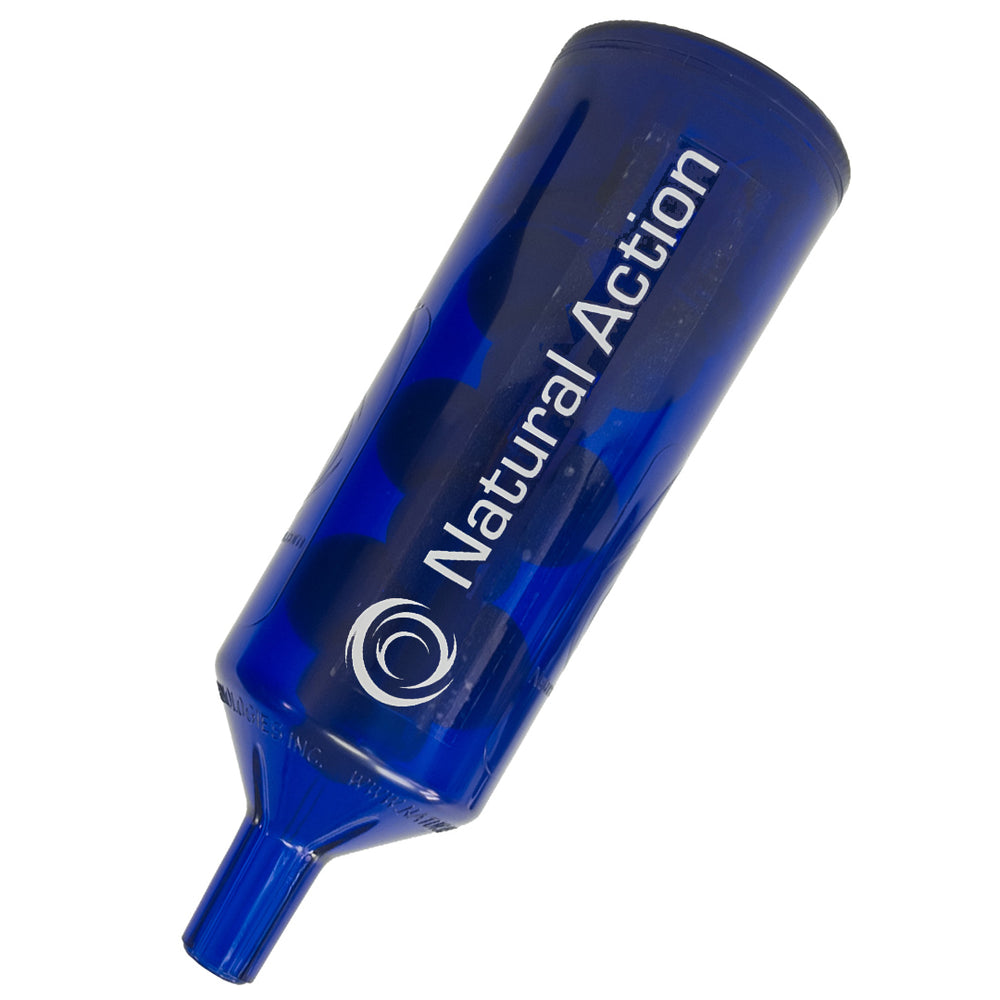
The Natural Action Portable Structured Water Revitalizer is the simplest way to experience the technology.
Pour water through the device and allow its internal flow-form geometry to create vortex movement as the water passes through.
It's ideal for people who want to begin exploring structured water without changing their plumbing.
EXPLORE THE PORTABLE STRUCTURED WATER REVITALIZER
Structure Your Drinking Water
Already have an under-sink filter?
Or reverse osmosis?
Natural Action offers under-sink and post-RO structuring systems designed to be installed downstream so the water is structured after filtration.
That's an important part of our philosophy:
Filter First. Structure Last.
EXPLORE UNDER-SINK STRUCTURED WATER SYSTEMS
Take Structured Water Whole Home
If you want to go beyond the kitchen sink, a whole-home structured water system allows the water entering your home to pass through Natural Action technology.
That means the structured-water approach isn't limited to drinking water.
It can extend to the water used throughout your home—from kitchen faucets to showers, laundry, outdoor water, and other connected fixtures.
EXPLORE WHOLE-HOME STRUCTURED WATER SYSTEMS
Start With the Right Question
The structured-water conversation can become complicated very quickly.
It doesn't have to.
Start here:
Are you concerned about what's in your water?
Investigate your water quality and determine whether appropriate filtration is needed.
Already have filtration or RO?
Consider structuring as a final stage.
Curious about structured water but don't want to modify your plumbing?
Start with a portable device.
Want the approach throughout your home?
Explore whole-home structuring.
The objective isn't to buy the most complicated system.
It's to understand your water and choose the right solution for what you're trying to accomplish.
The Bigger Question Veda Austin's Work Asks
Perhaps the most valuable thing about Veda Austin's work isn't any individual photograph.
It's the question her photographs encourage millions of people to ask:
How much do we really understand about water?
Water looks simple.
H₂O.
Yet its hydrogen-bond networks constantly form and reorganize. Its behavior changes at interfaces. It behaves differently as temperature, pressure, dissolved materials, and environmental conditions change.
And when water freezes, some of that complexity becomes spectacularly visible.
Veda Austin has helped bring that hidden world into public view.
For Natural Action, her imagery reinforces the reason we've spent years focused on a part of water treatment that is often overlooked:
Water isn't only about what it contains.
Movement matters too.
Nature has always moved water through curves, spirals, vortices, falls, rocks, and changing terrain.
Natural Action simply asked:
What if we designed water systems with that principle in mind?
That question became the foundation of our technology.
See the Water for Yourself
Don't take our word for it.
Explore the imagery.
Learn about Veda Austin's methodology.
Look at the Natural Action comparisons.
Read the research.
Understand the limitations.
Ask questions.
And then decide what makes sense for your water.
Because the future of better water may not be about choosing between filtration or structuring.
It may be understanding the role of both.
Filter what you don't want.
Restore the movement nature intended.
Better Water Starts Here.
Explore Natural Action Structured Water Systems
View Our Water Crystallography & Visual Evidence
Take the Natural Action Water Assessment
Frequently Asked Questions
Who is Veda Austin?
Veda Austin is a New Zealand-based water researcher, author, artist, and creator of Collective Molecular Photography, a technique used to photograph water during the transition between liquid and ice.
What is water crystallography?
Water crystallography broadly refers to studying or photographing patterns that appear as water freezes. Natural Action uses crystallographic imagery as observational material for comparing visible differences between water samples.
What is Collective Molecular Photography?
Collective Molecular Photography, or CMP, is the name Veda Austin uses for her technique of photographing partially frozen water during the transitional stage between liquid and ice.
Has Veda Austin photographed Natural Action structured water?
Natural Action presents comparative imagery and observations from Veda Austin involving water treated with a Natural Action Portable device. Differences were observed in the frozen patterns before and after treatment.
Does crystallography prove structured water has health benefits?
No. Frozen-water imagery can document visible differences between samples, but it does not independently prove hydration, medical, cellular, or other health benefits. Multiple variables can influence crystal formation.
What is structured water?
At Natural Action, structured water refers to water that has been physically conditioned through engineered movement and vortex action. Natural Action structuring devices do not rely on electricity or added chemicals to create the structuring process.
Does a Natural Action water structurer filter contaminants?
No. Natural Action structuring units are not filters. Filtration and structuring perform different functions. If your water requires contaminant reduction, appropriate filtration should be used.
Can structured water be used with a water filter or reverse-osmosis system?
Yes. Natural Action offers systems designed to work with filtration and RO. When combining the technologies, our approach is simple: Filter First. Structure Last.
What's the easiest way to try structured water?
The Natural Action Portable Structured Water Revitalizer provides a simple pour-through way to experience Natural Action's flow-form technology without plumbing installation.
Where can I learn more about Veda Austin?
Visit Veda Austin's official website at VedaAustin.com to explore her research, photographs, book, videos, and information about Collective Molecular Photography.


