



Do You Really Need a Water Filter? What to Check First
Water comes out of the faucet looking clear, so it is easy to assume there is nothing more to consider.
But clear water does not tell you the full story.
Your water may travel from a river, reservoir or underground source through a treatment facility, storage tanks, pumps, miles of municipal pipe and finally the plumbing inside your home. Municipal treatment plays an essential role in protecting public health, but water quality is not identical in every city, neighborhood or building.
That leads to one of today’s most common water questions:
Do I really need a water filter?
The honest answer is that not every household needs the same system. The right decision begins with learning about your own water—not buying the filter with the biggest list of claims.
Start With Your Consumer Confidence Report
If your home receives municipal water, your water supplier publishes an annual Consumer Confidence Report, often called a water-quality report. It explains where your water comes from, what regulated contaminants were detected and whether the utility met applicable drinking-water standards.
You can request the report from your utility or use the EPA Consumer Confidence Report
When reading the report, look for:
- Your water source
- Disinfectants such as chlorine or chloramine
- Lead and copper testing information
- Arsenic and nitrate results
- Disinfection byproducts
- PFAS results, if included
- Any violations or public notices
A report is an excellent starting point, but it describes the public water system. It may not reveal what happens in the service line, neighborhood pipes or plumbing between the utility and your faucet.
If you live in an older home, use a private well or have a specific concern, testing water from your own tap can provide more relevant information. The CDC advises choosing a treatment system according to the germs or chemicals you want to address because different technologies solve different problems.
You can also order an a Water Test Here
Common Reasons Families Filter Their Water
Chlorine taste and odor
Water utilities commonly disinfect water to control harmful microorganisms. That treatment is important, but some households dislike the taste or odor that remains at the faucet. Certain carbon filters are designed to reduce chlorine taste and odor.
PFAS
PFAS are a large family of persistent manufactured chemicals. Concern about PFAS has become one of the biggest reasons families are investigating home filtration.
The EPA identifies granular activated carbon, ion exchange and reverse osmosis among the technologies used to reduce certain PFAS. However, performance varies by product, water chemistry, flow rate, contaminant and filter condition. Look for a product-specific contaminant reduction claim or applicable independent certification rather than assuming every carbon or RO system performs identically.
Lead and aging plumbing
Lead can enter water through service lines, fixtures, solder or older plumbing materials. It cannot be seen, tasted or smelled. If lead is a concern, obtain appropriate testing and select a system specifically certified or documented for lead reduction.
Sediment, minerals and well-water concerns
Private wells are not managed like municipal water systems. Well owners are responsible for testing and maintaining their water. Sediment, hardness, iron, manganese, microorganisms, nitrate, arsenic and other conditions may require very different treatment approaches.
No single filter solves every possible water problem.
Does Boiling Water Remove Contaminants?
Boiling is useful when public-health officials issue certain microbial boil-water advisories. It is not a universal filtration method.
Boiling does not reliably remove contaminants such as lead, salts or PFAS. Because some water evaporates, boiling may even concentrate certain dissolved substances. Always follow the instructions issued by your local water authority during an advisory.
Under-Sink or Whole-Home Filtration?
This decision becomes easier when you identify where you want treated water.
Choose under-sink filtration when:
- Your priority is drinking and cooking water
- You want treatment at one dedicated faucet
- You want to reduce the expense and complexity of treating every gallon
- You are considering carbon filtration or reverse osmosis at the kitchen sink
Consider whole-home filtration when:
- The concern affects showers, sinks, laundry and appliances
- Sediment or odor is present throughout the house
- Your well or water test reveals conditions requiring point-of-entry treatment
- You want a custom system designed around actual water chemistry and household flow
Whole-home filtration should be engineered carefully. Removing disinfectant at the point of entry changes the conditions throughout the home’s plumbing, making correct design and maintenance especially important.
Do Not Forget Filter Maintenance
A filter is not a permanent container that can trap material forever. Capacity is limited.
Filter cartridges and RO membranes must be replaced according to the manufacturer’s schedule and the conditions of the incoming water. Waiting too long can reduce performance, restrict flow and create poor conditions inside an inadequately maintained system. The CDC recommends maintaining and replacing household filters according to manufacturer instructions.
Before purchasing, ask:
1. What is this system specifically designed or certified to reduce?
2. At what flow rate and capacity was it evaluated?
3. How often are filters replaced?
4. What will annual maintenance cost?
5. Does it treat one faucet or the entire home?
6. Who will install and service it?
Where Does Structured Water Fit?
This is where Natural Action takes a different approach.
Filtration and structuring are not the same process.
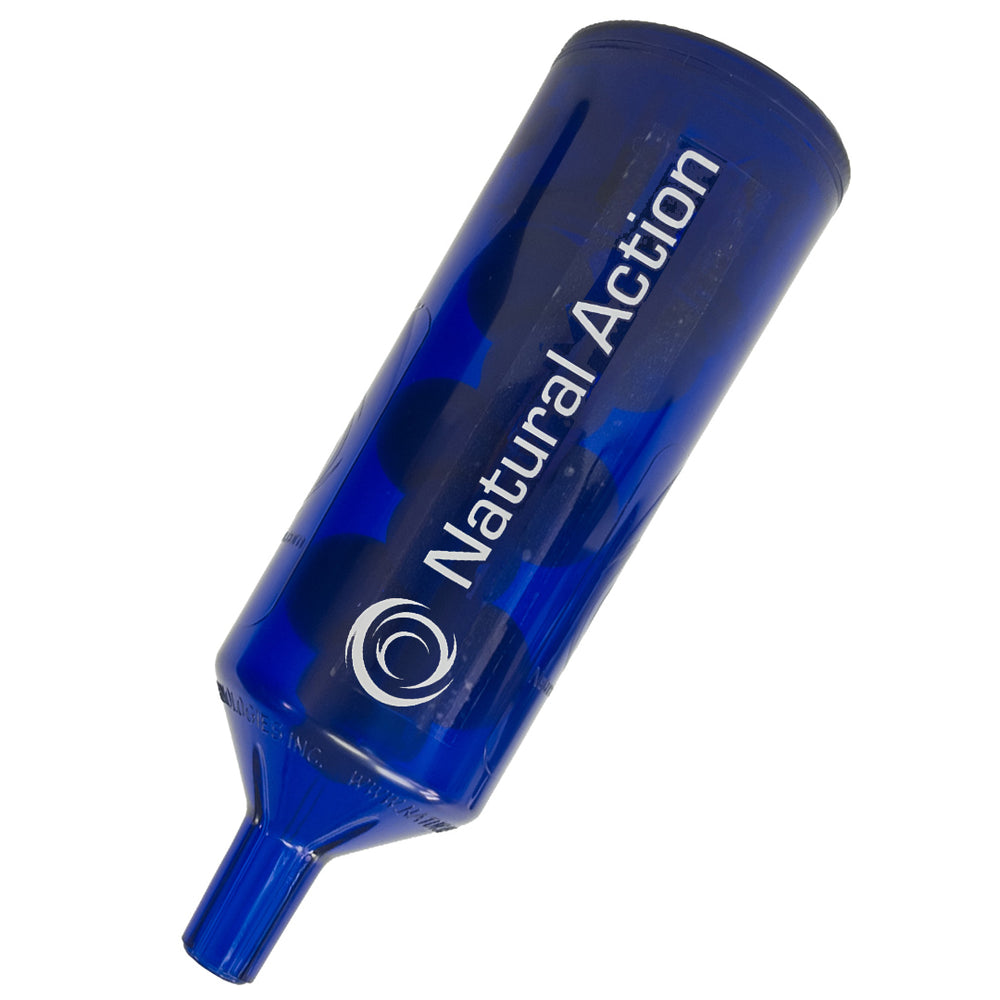
Filtration is selected to reduce specific unwanted substances. A Natural Action Revitalizer is not a contaminant-removal filter. It uses passive, vortex-inspired flow-form engineering to influence how water moves through the device.
For households that want both, Natural Action offers drinking-water solutions that combine filtration with structuring. Filtration comes first. Natural Action structuring is placed after filtration so the water reaching the glass receives both stages of the water upgrade.
Choose a starting point
- Portable Revitalizer: Experience structured water without installation.
- Sink Revitalizer: Add structuring to water at one faucet.
- Sink Revitalizer with Filtration:** Combine filtered and structured drinking water.
- 10-Stage RO Under-Sink Structured Water System: Advanced under-sink purification followed by Natural Action structuring.
- Whole-Home Revitalizer: Structure water throughout the home; this unit does not filter contaminants.
- Custom filtration and structuring: Build a point-of-entry system around water-test results and household needs.
Better Water Begins With a Better Question
Instead of asking, “What is the best water filter?” ask:
What is in my water, what do I want to change and where do I need treated water?**
That question leads to a system matched to your home—not a generic recommendation.
Review your water report. Test when appropriate. Match filtration to the substances you want to reduce. Then, if you want to go beyond filtration, explore how Natural Action can bring vortex-inspired movement back to the water your family uses every day.
Ready to take the next step?
Compare Natural Action water solutions or begin with the Portable Revitalizer collection.
Natural Action does not diagnose, treat, cure or prevent medical conditions. Product performance and contaminant reduction depend on the specific filtration system, incoming water and proper maintenance. A Natural Action structuring unit is not a contaminant-removal filter.
FAQ
Can I tell what is in my water by its taste or appearance?
No. Some water problems affect taste, odor or color, but many substances cannot be detected by the senses. Use a water-quality report or appropriate laboratory testing.
Does every reverse osmosis system remove PFAS?
RO is one of the technologies used for reducing certain PFAS, but product performance varies. Review the system’s specific reduction claims, testing and maintenance requirements.
Does a whole-home Natural Action Revitalizer filter water?
No. It structures water through passive, vortex-inspired flow. Add appropriate filtration when contaminant reduction is needed.
Should structuring happen before or after filtration?
Natural Action generally recommends filtration first and structuring at the final stage.


